Sunday, January 24, 2021

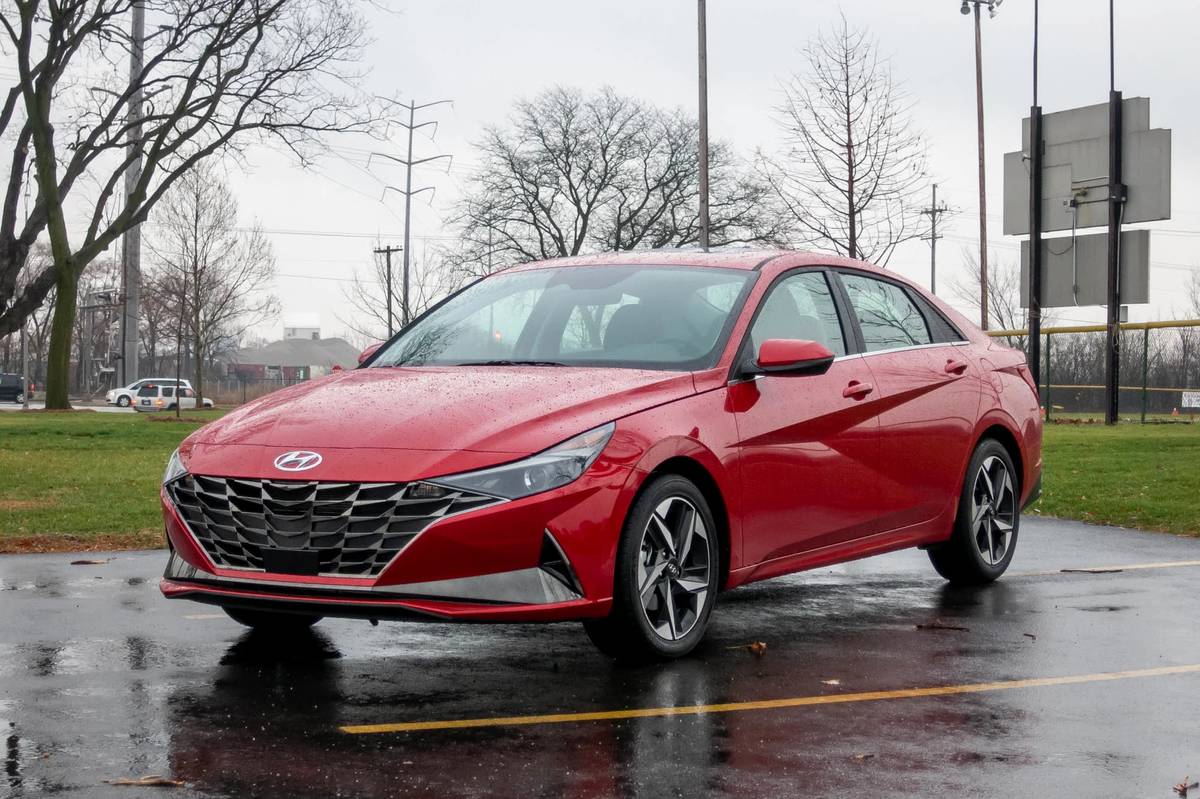
2021 Hyundai Elantra Review: Almost Great


2021 Hyundai Elantra

The verdict: The redesigned 2021 Hyundai Elantra compact sedan would be excellent rather than good if not for its lackluster cabin materials. If developing a car was a marathon, Hyundai didn’t run the last mile.

Versus the competition: For a mass-market compact sedan, the Elantra combines class-leading drivability with loads of user-friendly technology. Alas, its low-rent interior weighs all that down.

For 2021, the Hyundai Elantra sedan comes in SE, SEL and Limited trim levels, all with a 2.0-liter four-cylinder engine. (The Elantra GT hatchback has been discontinued.) The first-ever Elantra Hybrid, meanwhile, pairs a smaller four-cylinder with electric assist; it comes in SEL and Limited trims. Finally, the Elantra N Line has a turbocharged four-cylinder and the lineup’s only manual transmission. (Note that a higher-performance Elantra, called simply the N, without the “Line,” remains in the works as of this writing.) All other variants have an automatic, which is also available on the N Line. Stack up the whole current group, or compare the 2020 and 2021 Elantra

We evaluated an SEL over the course of a week and also took brief drives in the Limited Hybrid and a stick-shift N Line. 

SE, SEL, Limited: Refined Drivability

A confounding but age-old reality in our recent comparison between the Honda Civic, Nissan Sentra and Toyota Corolla sedans was the trade-off between ride quality and handling chops. Hyundai elevates both better than any car in that trio, as well as most other compact sedans. 

Despite a torsion-beam rear axle — a cost-saving setup versus the independent rear suspensions used by some rivals, including the Civic and Corolla — the Elantra rides impressively. Aside from some skittishness during mid-corner bumps, body control feels impressive for a mass-market compact sedan. Ditto for shock absorption: The suspension takes sewer covers and rutted pavement with a degree of sophistication reminiscent of a larger, or pricier, car — and that’s with our SEL model’s optional 17-inch wheels and P225/45R17 tires. With available wheel diameters ranging from 15 to 18 inches, it’s possible lesser versions of the Elantra ride even more comfortably. (All other things being equal, larger wheels generally diminish ride quality.)

Kudos, too, for the Elantra’s reflexes. Fling it into a corner and the nose pushes early, but the steering feels as quick-ratio as the Civic’s — still one of the best-handling cars in the class — with less of the outgoing Elantra’s vagueness. The wheel seldom feels twitchy on center even at higher speeds, and body roll is nicely contained through sweeping curves.

Under the hood is last year’s 2.0-liter four-cylinder engine (147 horsepower, 132 pounds-feet of torque), which runs on a more-efficient Atkinson cycle; gone is the prior generation’s Eco trim and its turbocharged 1.4-liter four-cylinder. The 2.0-liter has reasonable power past 3,000 rpm or so, and Hyundai’s continuously variable automatic transmission is a motivated partner to get you there. Revs climb energetically from a stop, and if you need more power while already in motion, the CVT kicks up engine rpm swiftly enough to mimic a downshift from a conventional automatic. The 2021 Elantra is not particularly quick, but it does a nice job with what it has to offer.

Elantra Hybrid: Even Better

The Elantra Hybrid pairs a 1.6-liter Atkinson four-cylinder with a 32-kilowatt electric motor for a total system output of 139 hp and 195 pounds-feet of torque. It’s a handy combination, particularly on the torque side, to move you out from a stop. Unlike the many hybrids that employ CVT-like power-split devices, Hyundai’s system uses a conventional stepped automatic transmission — in this case a six-speed dual-clutch unit. The stepped gears bring a welcome sensation of upshifts and downshifts, though the downshifts arrive only after a long delay or hard stab on the gas. Sport mode provides much-needed accelerator responsiveness — there’s your downshift — if you don’t mind sacrificing fuel efficiency.

That efficiency is considerable, with 50 mpg in EPA-estimated combined gas mileage (54 mpg in a higher-efficiency Elantra Hybrid Blue edition). That’s up some 40% over the Elantra’s still-impressive EPA 35 mpg combined (37 mpg for the SE trim). Both figures are competitive against respective rivals; compare Elantra Hybrid mileage or the regular Elantra’s.

The Elantra Hybrid gets an independent rear suspension versus the non-hybrid’s torsion beam, but the differences are hard to pick out. I drove the Elantra Hybrid Limited back to back with an Elantra SEL, both with 17-inch wheels, over the same route. Both cars rode similarly well — more of a feat for the SEL’s simpler hardware, perhaps, but we preach results over formula. The results speak for themselves.

Elantra N Line: A Minor Letdown

If there’s any disappointment in how the Elantra drives, it comes with the N Line. Like the Elantra Hybrid, it gets an independent rear suspension, but tuning is stiffer all around versus the regular Elantra, with a thicker front stabilizer bar, as well. It shows: Shock absorption is notably firmer — though not objectionably so, as was the case with its Elantra Sport predecessor. The steering, altered here for N Line duty, augments the regular Elantra’s quick ratio with better feedback. Whether through chassis tuning or better grip (our test car had Goodyear Eagle F1 summer tires), or a little of both, understeer feels immediately better contained.

So where’s the letdown? It’s all in the N Line’s powertrain. The N Line packs Hyundai’s turbocharged 1.6-liter four-cylinder (201 hp, 195 pounds-feet of torque), an engine we’ve seldom found responsive enough. Hyundai says peak torque comes as early as 1,500 rpm, but it’s only after notable turbo lag. The lag diminishes if you keep engine revs north of 4,000 rpm or so, which requires frequent work with the stick-shift N Line’s longish throws and muddy gates. Even then, the N Line never feels particularly quick. The optional automatic transmission is a seven-speed dual-clutch unit, so it might alter some of the power delivery. Alas, we didn’t evaluate it.

Tech Features

SE, SEL and N Line models have two USB ports, HD radio and an 8-inch touchscreen with adjacent physical controls, including the must-have volume and tuning knobs. Impressively, the standard Apple CarPlay and Android Auto both have wireless integration. Wireless phone charging — critical if you really want to go cord-free, as wireless Apple CarPlay and Android Auto can drain your phone’s battery fast — is optional, as are all-digital gauges.

The Limited trim comes with wireless charging and swaps the 8-inch screen for a 10.25-inch touchscreen. It’s a slick, high-resolution display, but it introduces some annoyances. Gone is the tuning knob, and both Apple CarPlay and Android Auto revert to a wired setup. What’s more, the larger display has a widescreen ratio that’s starved for height, so items like the backup camera image appear only on part of the screen. The navigation map and Apple CarPlay leverage the entire display, but I didn’t test Android Auto (I’m an iPhone user). Cars.com staffers with Android devices have observed display limitations in other Hyundai models with the automaker’s 10.25-inch display. See for yourself on a test drive.

The Fatal Flaw?

For all the Elantra’s strengths, the obvious flaw comes inside. It’s not space: The low center console affords a wide berth for the driver, and backseat knee clearance should suit adult passengers. Our independent accounting of cargo space found 19 cubic feet in the Elantra’s trunk, within 1 cubic foot of our accounting in the Civic, Corolla and Sentra.

Hyundai’s problem is materials quality. Even in the Limited trim, the upper doors, where your arms and elbows might rest, are all cheap hard plastic, as are most areas your knees touch. Things decline even further in the backseat, where the dollar-store treatment extends to the door armrests. The glove box opens with an undamped clatter; the headliner is mouse fur.

All of that falls in line with the prior-generation Elantra, no standout for cabin materials itself. But if you haven’t been in other compact cars, you’re missing out. The Civic and Impreza have a proper woven headliner. The Sentra offers soft-touch materials where your knees land, and almost all rivals have soft-touch door materials up front, especially in higher trim levels. The Mazda3 keeps it classy front and rear.

There’s potential to right the ship immediately. All major controls feel uniformly meticulous, unlike rivals like the Corolla. All Hyundai would have to do is swap in better materials immediately for a modest cost per car. Of course, the bean counters will multiply that by the hundreds of thousands of cars the automaker hopes to sell. You know how that ends.

Features and Value

As of this writing, the Insurance Institute for Highway Safety has yet to publish crash-test results for the 2021 Elantra, but once the agency does, those results will appear here. Standard safety and driver-assist features include automatic emergency braking with pedestrian detection, a blind spot warning system and lane-centering steering.

The Elantra SE starts just under $21,000 (all prices include destination). That’s roughly competitive with rivals’ base models, most of which have standard automatic transmissions, as well. Standard features include 15-inch alloy wheels, the 8-inch touchscreen with wireless phone integration and the aforementioned safety tech. Finding an SE might be hard, however: As of this writing, just 12% of new 2021 Elantra sedans on Cars.com are SE models, and that’s with the Elantra Hybrid and N Line not yet on sale. Their eventual arrival will consign the SE to an even smaller slice of the pie.

The vast majority of current inventory is the next-up Elantra SEL (about $22,000), which adds larger wheels, dual-zone automatic climate control and keyless access with push-button start. Add options or climb the trim levels, and you can get leather upholstery, a power driver’s seat with memory, heated and ventilated front seats, the larger touchscreen, Bose premium audio, adaptive cruise control and Highway Driving Assist. (HDA augments Hyundai’s standard lane-centering, called Lane Following Assist, with additional capabilities on designated highways).

The N Line runs about $25,000, while the well-equipped Limited (around $26,500) doesn’t have any factory options. The Elantra Hybrid, meanwhile, exacts a $2,650 premium for its SEL and Limited trims versus the same non-hybrid examples. As such, expect an Elantra Hybrid Limited to set you back about $29,000 — likely the highest sticker price most shoppers will see on any Elantra. That’s still a decent value, especially considering Hyundai’s impressive warranty and three years’ free maintenance.

Value might drive many shoppers toward the Elantra, and excellent drivability should justify consideration even among the less budget-conscious. The downfall comes with Hyundai’s lack of investment inside, a peskiness that leaves the Elantra at four-fifths of great.

Cars.com’s Editorial department is your source for automotive news and reviews. In line with Cars.com’s long-standing ethics policy, editors and reviewers don’t accept gifts or free trips from automakers. The Editorial department is independent of Cars.com’s advertising, sales and sponsored content departments.

2022 Mercedes EQA Will Be the EV Sibling of the GLA-Class

 The smallest and most affordable Mercedes EV SUV is headed on sale later this year, at least in other countries.

2022 mercedes benz eqa
MERCEDES-BENZ
  • Mercedes-Benz EQA is the EV version of the GLA-Class, headed on sale later in 2021.
  • EQA will have a NEDC range of about 300 miles and will start around $57,750 in Germany.
  • Mercedes has not yet decided whether to offer it in the U.S.

    Mercedes-Benz took the wraps off its newest and smallest electric offering this week, unveiling the EQA compact SUV that will go on sale later this year, featuring a 66.5-kWh battery pack. Closely related to the GLA-Class and approximately the same size, the EQA will be powered by a front-mounted motor good for 187 hp and 277 lb-ft of torque, on tap from the moment you press the accelerator.


    2022 mercedes benz eqa

    Its other performance specs indicate that the EQA prioritizes range over performance: The EQA will jog from 0 to 62 mph in 8.9 seconds, and up to a top speed of 99 mph. So no ludicrous launch times and no ludicrous autobahn speeds either, even though Europe is where the EQA is headed, along with China. Its horsepower output also puts it a little below the gas-engined GLA 250, which may or may not be a priority for EV buyers, even though its torque rating is above the GLA's 258 lb-ft.

    When it comes to range, the pocket ute has been rated at 486 kilometers in the optimistic New European Driving Cycle (NEDC), which translates to just over 300 miles. The model's WLTP range, however, feels more realistic at 265 miles, based on what we've seen with other EVs rated in multiple regions and given it battery size.

    Whether we'll ever get an EPA range for this vehicle is a separate question, because Mercedes-Benz has not yet made a decision to offer the model here.

    That's right: The EQA may well pass us by. It will have a starting price of €47,540 in Germany, including VAT and prior to the application of any incentives. This translates to about $57,800 if it were offered here, though without VAT it would be about $10,000 lower. It could land just around the $50,000 mark after the application of the federal incentive, which would put it... a little outside striking distance of other electric SUVs and crossovers of its size that are headed here this year from VW and Nissan. Of course, there'll be a premium for the three-pointed star, but that's not unusual per se.

    2022 mercedes benz eqa
    It remains to be seen how the EQA could be range-rated in the U.S., if it makes it here, but the starting price seems right for its class and size.

    If you'd still like a smallish Mercedes EV in the SUV wrapper, the good news is that the larger EQB is definitely headed stateside, and it'll be of several EV models that Mercedes will launch in the next year and a half, most of which will be of the SUV bodystyle. Just like its name suggests, the EQB will be about the size of the GLB sport utility, which itself debuted just a short time ago.

    How the Bugatti Chiron became the first 300mph road car

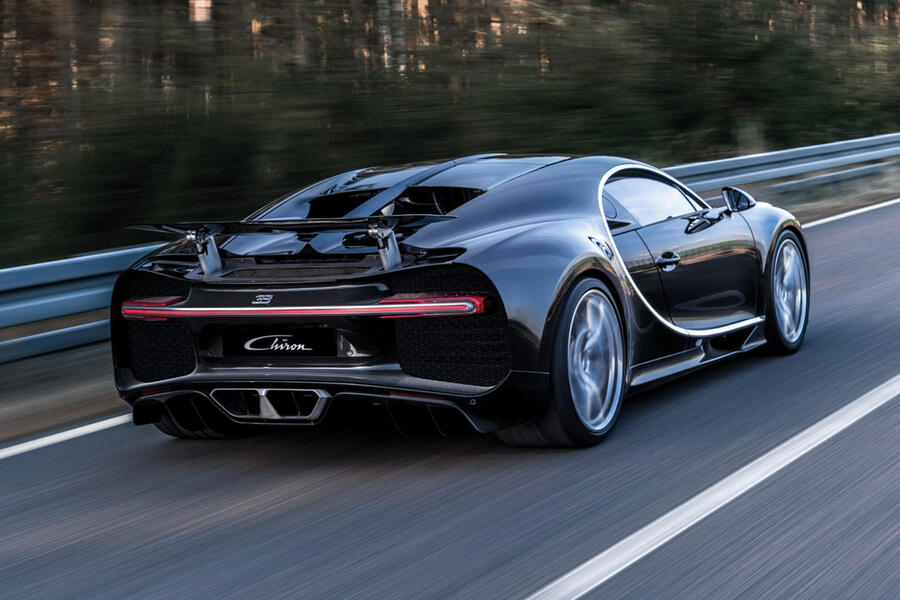
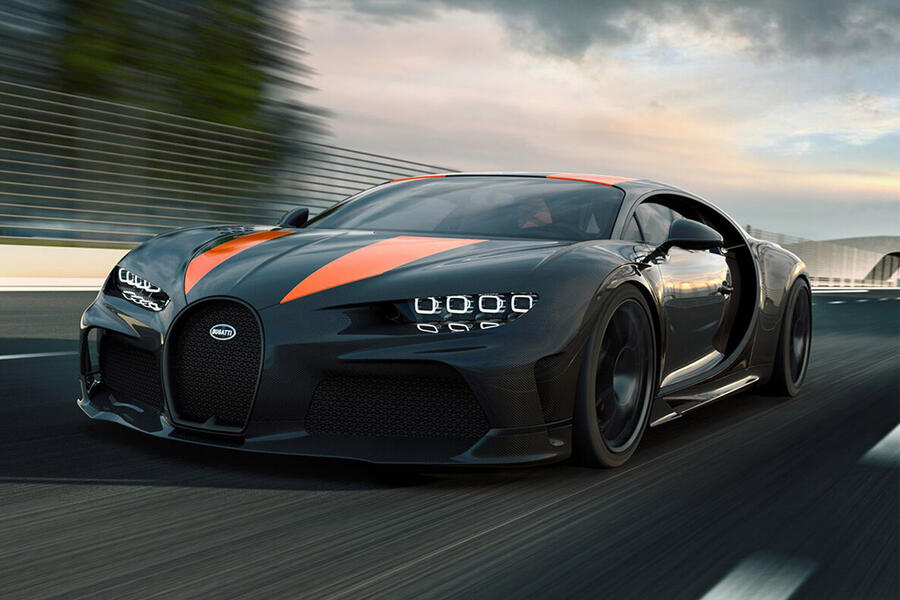
     When Bugatti broke the 300mph barrier with the Chiron last year, it looked like a record that might stand forever. Reaching the unlikely peak of 304.77mph had required considerable engineering effort – and the creation of what became the Chiron 300+ special edition – but also exclusive use of the 12-mile high-speed track at Volkswagen’s Ehra-Lessien proving ground in Germany.

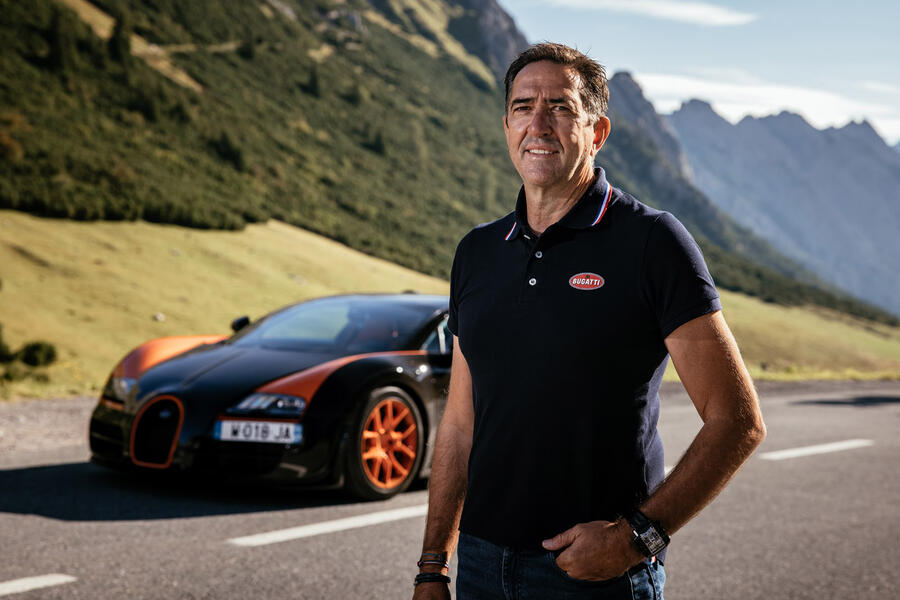
    It took driver Andy Wallace nearly a week to build up to the record speed, and he only reached his target on the final run of the last day. When Bugatti boss Stephan Winkelmann announced the record, he also said the firm wouldn’t seek to defend it.

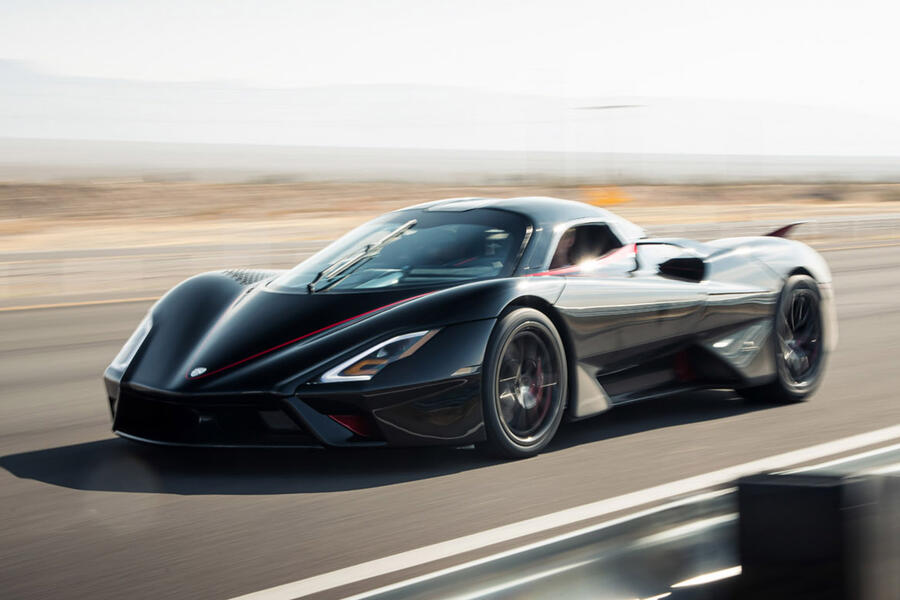
    Then in October, relative minnow SSC from the US announced that it had not just broken the Chiron’s record but smashed it. Its 1750bhp Tuatara, running on public roads in Nevada, had reportedly been driven to a two-way average of 316.11mph by British racer Oliver Webb, having hit 331.15mph in one direction.

    That seemingly impossible figure soon had internet sleuths exhaustively analysing the video footage of the run, with some reckoning the car hadn’t gone nearly as fast. SSC stands by its numbers, blaming a video editing error, but boss Jerod Shelby has now said his company will answer the doubters by doing the whole thing again.

    This interview with Wallace took place last September, when his claim to be the world’s fastest man in a production car was still undisputed. The 59-year-old Brit is actually a two-time holder of the record, having driven the McLaren F1 to 240.1mph in 1998, with his career highlights also including an outright win at the Le Mans 24 Hours in 1988.

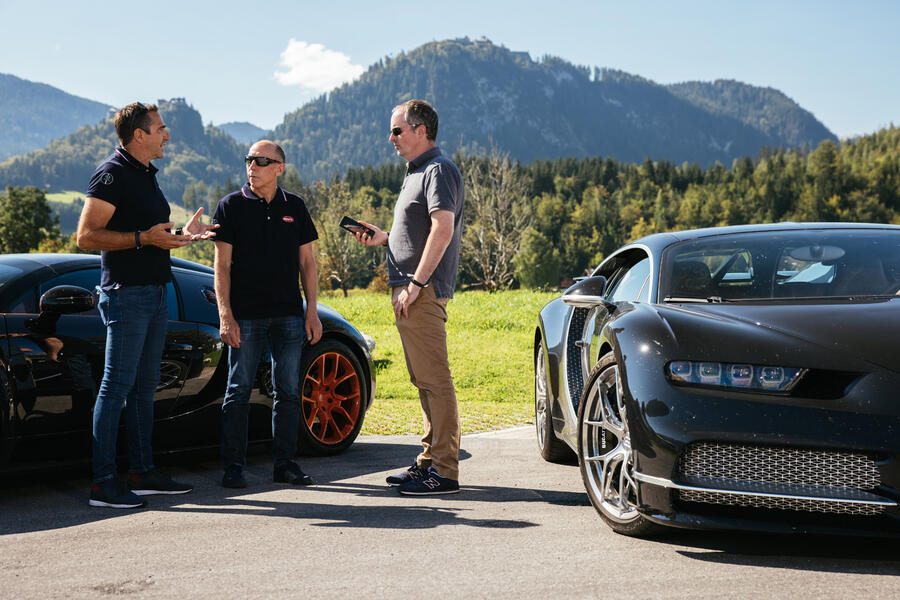
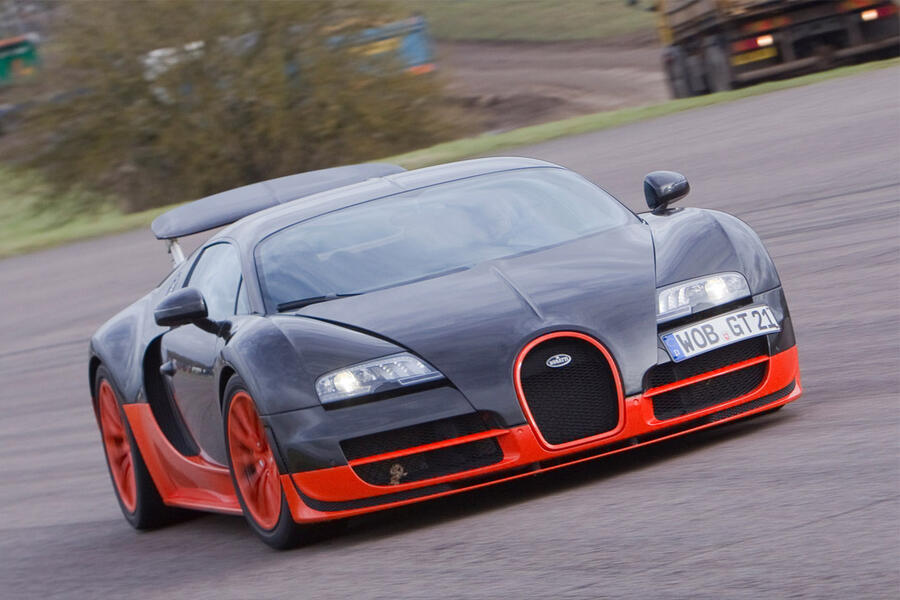
    Frenchman Pierre-Henri Raphanel, who is also 59 and a successful sports car racer and Le Mans victor (1997), drove the Bugatti Veyron Super Sport to its record 267.9mph in 2010. These days, both he and Wallace work for Bugatti as ambassadors and test drivers.

    Both have well-stocked trophy cabinets at home and are quick to acknowledge that travelling quickly in a production car is less challenging than sharp-end motorsport. But the risks of going so fast are still very real.

    “It’s a mental exercise,” says Raphanel. “It’s a straight line and you have to stay straight and keep the power on. But you also know that if anything is happening at that speed, you’re unlikely to come back to the engineer to say ‘there was something wrong’. It’s more likely that you will not come back.”

    “You do think about the risks, but not when you’re actually driving,” Wallace adds. “You need to have confidence in the car but also in the people who have built it and who are looking after the stuff you can’t control.”

    Any record attempt brings the weight of expectations. Raphanel says he was given a target based on what Bugatti’s engineers believed the car was capable of: more than 425kph (264mph). “But you arrive on the day of the record and there are 100 people there – you can’t go ‘sorry guys, I don’t feel like doing it today’,” he says. Wallace’s Chiron run nine years later came with a substantially higher target – that of breaking the 300mph barrier. The big issue being, as he explains, that entering the last day the top speed had stalled at a tantalisingly close 299.8mph. That, as he admits, “would have been a PR disaster”.

    Both runs were carried out at Ehra-Lessien, with ultra-high speeds magnifying the effect of even tiny imperfections in the ultra-smooth surface. Raphanel’s attempt was done to satisfy the requirement for a two-way average. “You realise that just going the opposite way to the direction the track is used in makes a difference,” he remembers. “It’s like when you shave the wrong way: one way is smooth and the other is like the Tarmac makes little teeth, and these change the way the car feels and behaves.”

    Going essentially the wrong way also negated the effectiveness of much of Ehra-Lessien’s carefully designed protection system. The high-speed track has a single barrier where speeds are lowest, rising to double then triple height along the REF straight. So on his reverse run, Raphanel’s peak speed came with the least protection. “If anything had happened where the speed was highest, I would have been in the forest,” he says.

    Wallace went in only one direction, as Volkswagen subsequently decided to ban wrong-way high-speed running on safety grounds. But the Chiron’s greater velocities still revealed a more dramatic issue: a join between two different track surfaces that Wallace began to call ‘the jump’. “The engineers didn’t believe me,” he says, “then they looked at the data and realised that when the car was hitting it at 447kph (277.8mph) or so, it really was taking off.”

    Any pioneer has to venture into the unknown – something that became more of an issue to Wallace as the Chiron’s peak speeds rose. “Before long at 400kph (248.5mph), my heart rate was normal, because we did 1000km (621 miles) of testing during the week to validate the simulated aero numbers that Dallara had done, and most of it was around there,” he says. “400kph still felt really calm and comfortable. But 450kph (279.6mph) never did.”

    Wallace grew used to ‘the jump’ and to the tendency of the Chiron to wander on the more worn track surface that followed it, as well as the increasing influence of even modest crosswinds. But as the speeds rose, he found himself facing a new and unfamiliar one: the gyroscopic forces developed by the huge rotational speeds of the Chiron’s wheels.

    “I’d liken it to a child’s spinning top,” Wallace explains. “When you steer a car normally, you have some self-centring from the caster. But the gyroscopic forces mean that if the car is going left, it wants to carry on and will continue until you make another input. So you steer the other way and, unless you get it perfect, the effect is magnified.”

    That’s why the limiting factor for the Chiron wasn’t performance but rather Wallace’s confidence in keeping it on the road. “By the Thursday night, I was stuck. I just couldn’t go faster because, every time I reached that speed, I needed all three lanes,” Wallace remembers. “Over dinner, I said: ‘I’m just going to stay with my foot on the floor tomorrow until it passes the magic number, even if that means it’s too late to slow down for the banking. I’m going to do that because you can’t have a supercar that goes 299.8mph.’”

    Fortunately, it didn’t come to that. On his final run, Wallace carried more speed onto the straight than he had before, felt more confident after the jump, then stayed flat out for as long as he dared (“at 135 metres per second, it’s really hard to judge braking distances”), slowing down just enough for the banking at the far end of the track and returning to the staging area to discover that he had managed nearly 305mph.

    Raphanel acknowledges that setting his record was considerably less fraught but admits to having had worries about tyre life. He explains: “They had tested them on a bench machine at 435kph (270.2mph), because that’s all the machine could do: 435kph and a 20-second cycle. They said after six cycles, the tyres will probably explode, which of course means two minutes. But then when I broke the record, I noticed that the tyres were the same as I had used the day before; they said ‘you’re still in the window’. All I could do was hope: it’s not a window you want to fall out of.”

    Bugatti says that it won’t defend its title, but if the company were to change its mind, would either of its record-setters be tempted to try again if Winkelmann phoned to offer them another go?

    “‘Hello? Hello? Stephan? It’s a bad line, I can’t hear you,’” jokes Raphanel. “Personally, I was very happy to do this, to be part of history – but in my case, one time was enough. We did the records to show that Bugattis are the best cars in the world, not because we’re the best drivers.”

    “When you’re a racing driver, if somebody asks you a question like that, you’ll always put on this persona of everything being good and say ‘bring it on’,” adds Wallace. “It’s easy to stand here knowing that we’re not going to do it and say ‘of course I would’. But in reality, it’s not just a straight yes: I would seriously have to think about it. It’s not just a walk in the park.”

    The 10 fastest production cars (sort of)

    While overall speed records are recorded and verified by the FIA, the production car title has always been subject to looser criteria and, like boxing, runs under what are effectively a variety of codes and self-appointed sanctioning bodies.

    The big ideological division is now one that dates to the very beginning of record-setting: whether a car needs to run a course in two directions for an average time. Although Pierre-Henri Raphanel’s Bugatti Veyron Super Sport record was run in two directions at Ehra-Lessien, Volkswagen has since stopped these, meaning that two-way runs can only take place on either lesser tracks or public roads. Guinness World Records recognised Raphanel’s run as a record but not Andy Wallace’s later effort; instead, the Chiron’s time was validated by Germany’s TUV Technical Inspection Association.

    Production status is another thorny issue, with some dissent as to whether the record-setting Chiron qualified; the modifications carried out to it inspired a Super Sport 300+ limited run, but it came after the record was set. The SSC Tuatara also struggles with the definition, as no customer cars have been delivered yet. Then there’s the matter of permitted modification, which was more liberal in the past; the acknowledged records of both the Jaguar XJ220 and McLaren F1 were set with raised rev limits.

    With that in mind and with copious use of provisos, here are the top 10.

    1 - SSC Tuatara

    Year 2020 Speed 316.11mph Driver Oliver Webb Location Public road, Nevada, US Guinness World Record? No Proviso Claimed and awaiting verification. SSC plans to repeat due to controversy

    2 - Bugatti Chiron SS 330+

    Year 2019 Speed 304.77mph Driver Andy Wallace Location Ehra-Lessien, Germany GWR? No

    3 - Koenigsegg Agera RS

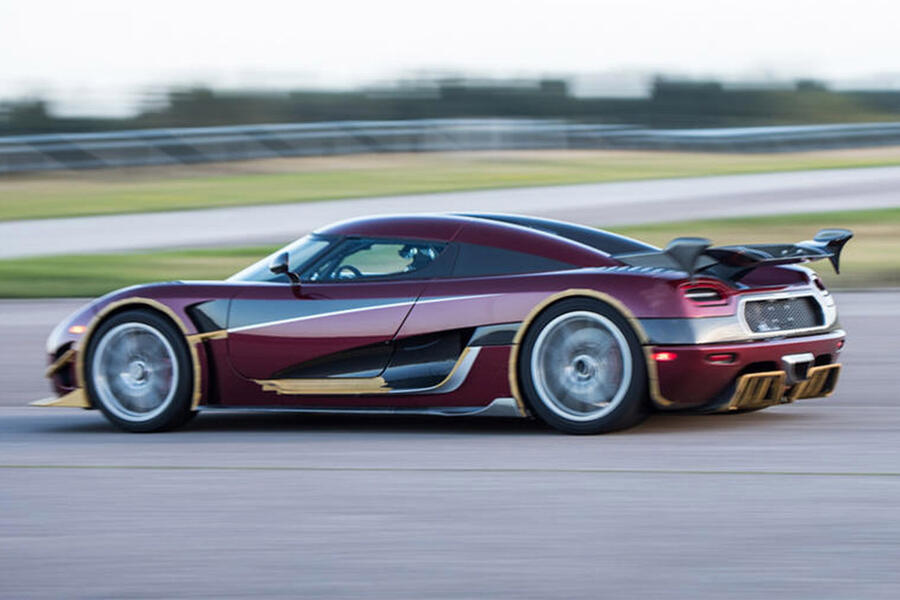
    Year 2017 Speed 277.87mph Driver Niklas Lilja Location Public road, Nevada, US GWR? No Proviso Record request submitted but seemingly never given

    4 - Hennessey Venom GT

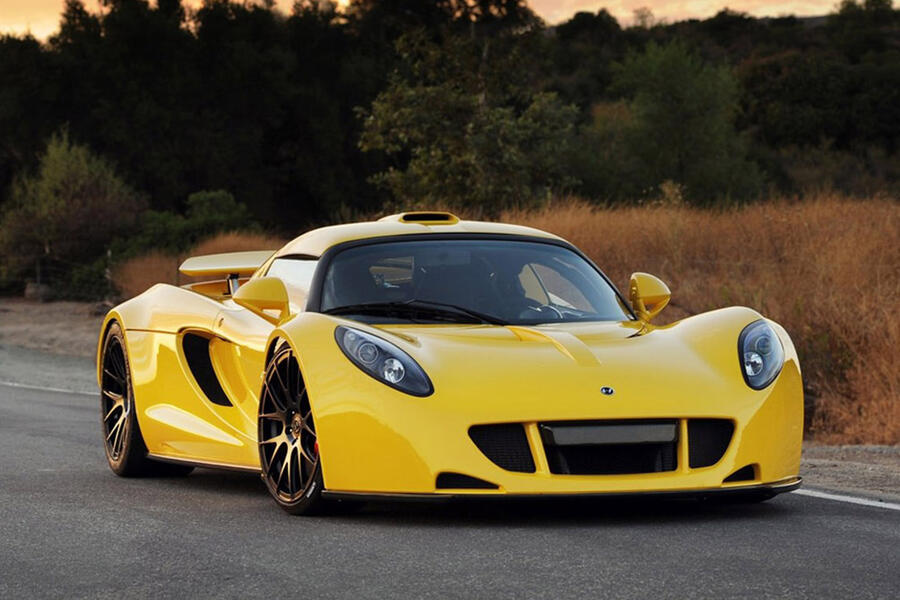
    Year 2014 Speed 270.49mph Driver Brian Smith Location Kennedy Space Center, Florida, US GWR? No Proviso Not really series-production

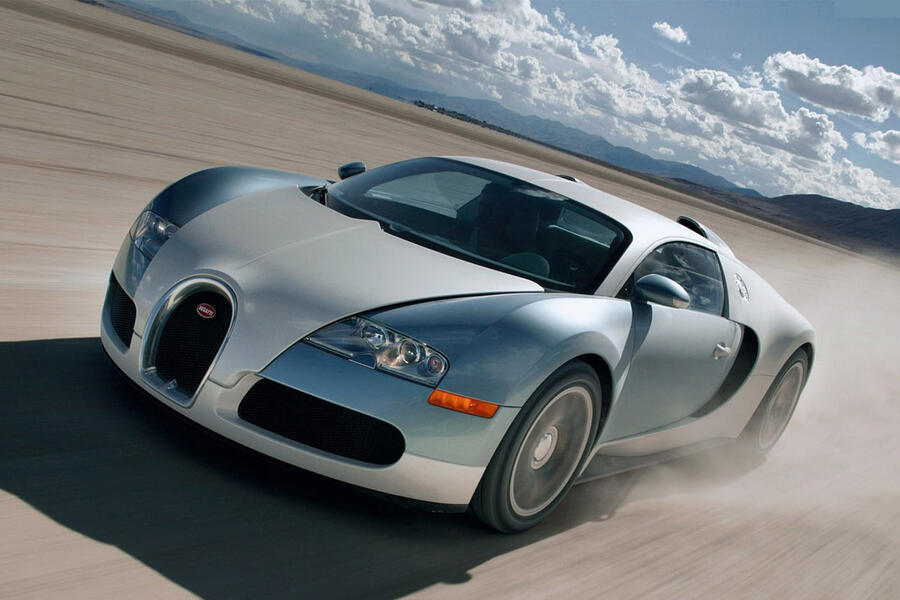
    5 - Bugatti Veyron SS

    Year 2010 Speed 267.9mph Driver Pierre-Henri Raphanel Location Ehra-Lessien, GWR?

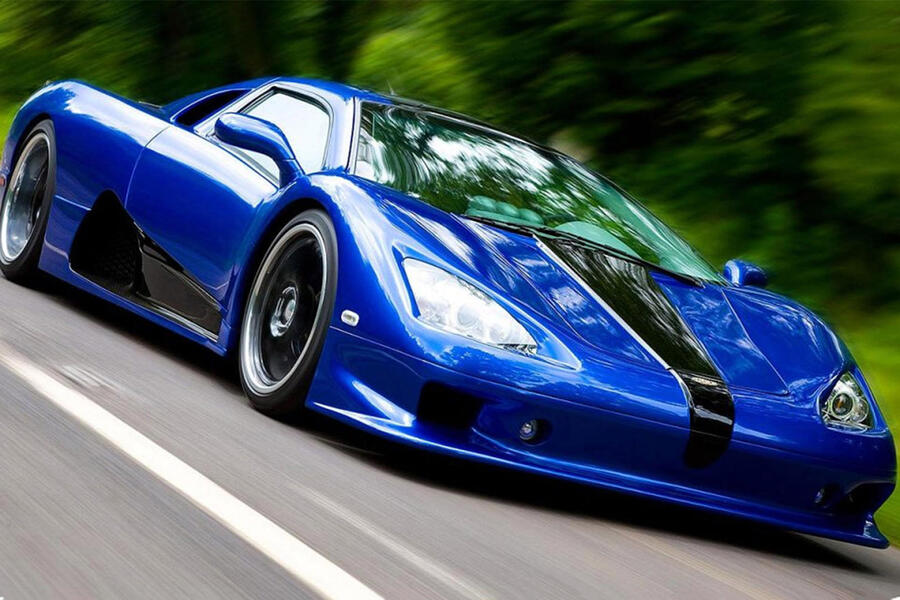
    6 - SSC Ultimate Aero TT

    Year 2007 Speed 256mph Driver Chuck Bigelow Location Public road, Washington, US GWR? Yes

    7 - Bugatti Veyron

    Year 2005 Speed 253.8mph Driver Uwe Novacki Location Ehra-Lessien, Germany GWR? No

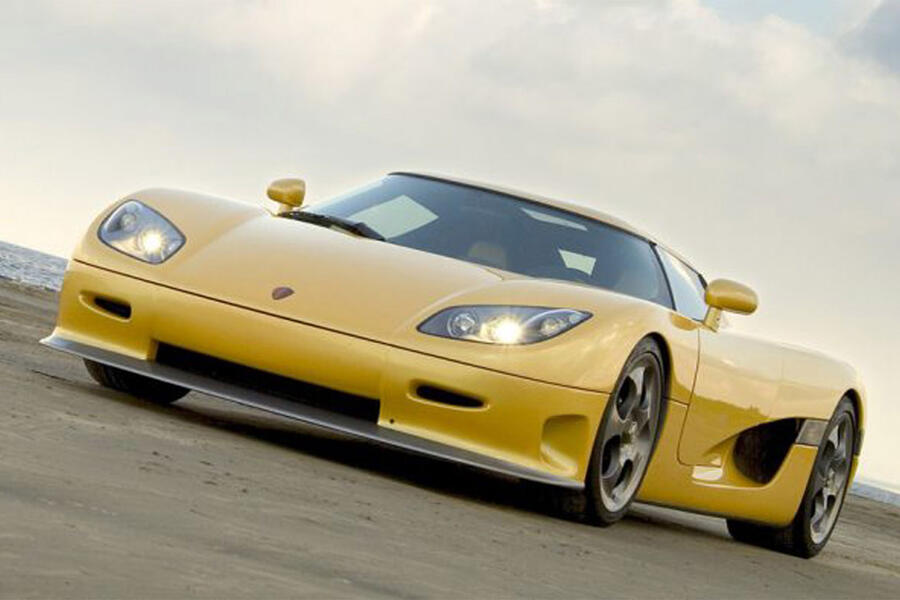
    8 - Koenigsegg CCR

    Year 2005 Speed 241.1mph Driver Loris Bicocchi Location Nardò, Italy GWR? Yes Proviso Rev limit raised and no cats

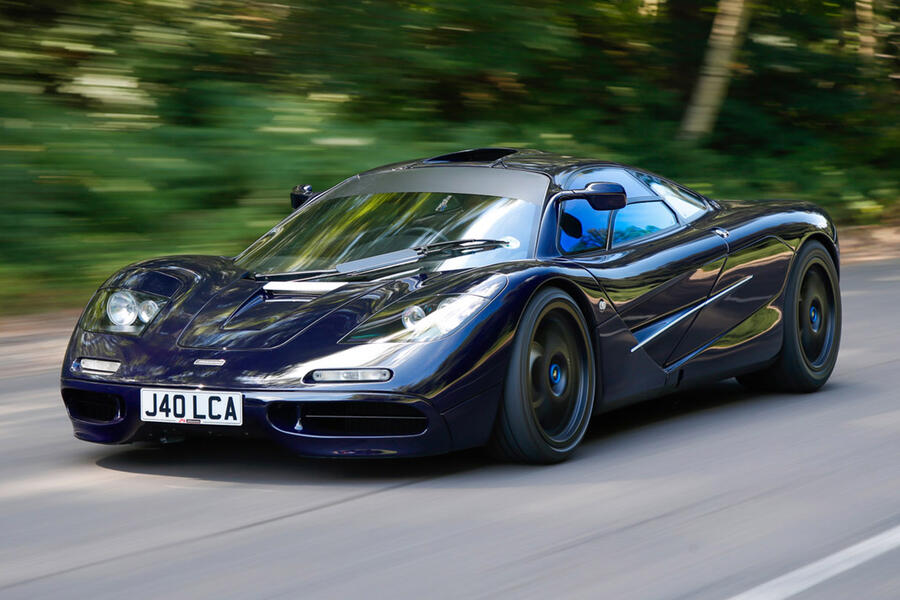
    9 - McLaren F1

    Year 1998 Speed 240.1mph Driver Andy Wallace Location Ehra-Lessien, Germany GWR? Yes Proviso Rev limit raised, having previously done 231mph

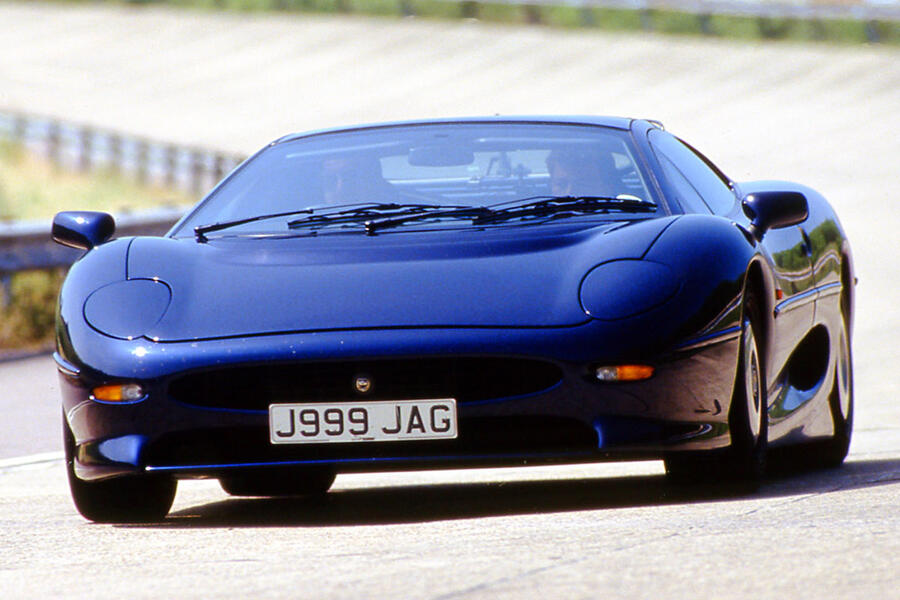
    10 - Jaguar XJ220

    Year 1992 Speed 217.1mph Driver Martin Brundle Location Fort Stockton, Texas, US GWR? Yes Proviso Rev limit raised and no cats