Sunday, January 24, 2021

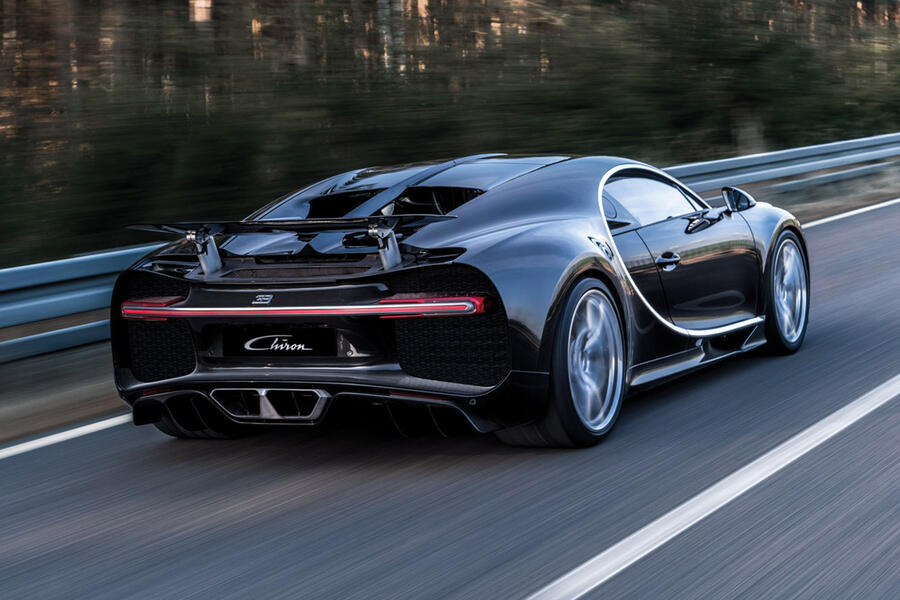
How the Bugatti Chiron became the first 300mph road car

 When Bugatti broke the 300mph barrier with the Chiron last year, it looked like a record that might stand forever. Reaching the unlikely peak of 304.77mph had required considerable engineering effort – and the creation of what became the Chiron 300+ special edition – but also exclusive use of the 12-mile high-speed track at Volkswagen’s Ehra-Lessien proving ground in Germany.

It took driver Andy Wallace nearly a week to build up to the record speed, and he only reached his target on the final run of the last day. When Bugatti boss Stephan Winkelmann announced the record, he also said the firm wouldn’t seek to defend it.

Then in October, relative minnow SSC from the US announced that it had not just broken the Chiron’s record but smashed it. Its 1750bhp Tuatara, running on public roads in Nevada, had reportedly been driven to a two-way average of 316.11mph by British racer Oliver Webb, having hit 331.15mph in one direction.

That seemingly impossible figure soon had internet sleuths exhaustively analysing the video footage of the run, with some reckoning the car hadn’t gone nearly as fast. SSC stands by its numbers, blaming a video editing error, but boss Jerod Shelby has now said his company will answer the doubters by doing the whole thing again.
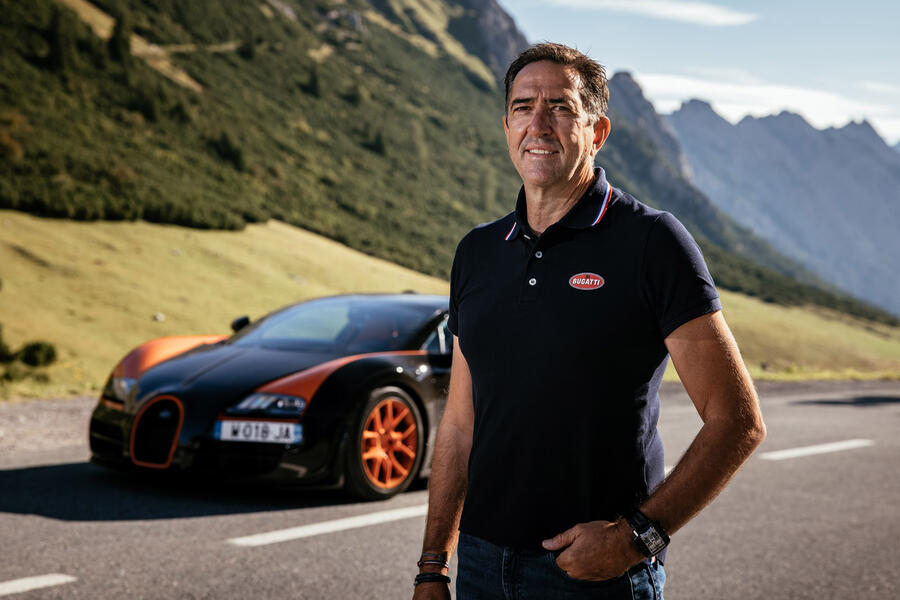
This interview with Wallace took place last September, when his claim to be the world’s fastest man in a production car was still undisputed. The 59-year-old Brit is actually a two-time holder of the record, having driven the McLaren F1 to 240.1mph in 1998, with his career highlights also including an outright win at the Le Mans 24 Hours in 1988.

Frenchman Pierre-Henri Raphanel, who is also 59 and a successful sports car racer and Le Mans victor (1997), drove the Bugatti Veyron Super Sport to its record 267.9mph in 2010. These days, both he and Wallace work for Bugatti as ambassadors and test drivers.

Both have well-stocked trophy cabinets at home and are quick to acknowledge that travelling quickly in a production car is less challenging than sharp-end motorsport. But the risks of going so fast are still very real.

“It’s a mental exercise,” says Raphanel. “It’s a straight line and you have to stay straight and keep the power on. But you also know that if anything is happening at that speed, you’re unlikely to come back to the engineer to say ‘there was something wrong’. It’s more likely that you will not come back.”

“You do think about the risks, but not when you’re actually driving,” Wallace adds. “You need to have confidence in the car but also in the people who have built it and who are looking after the stuff you can’t control.”
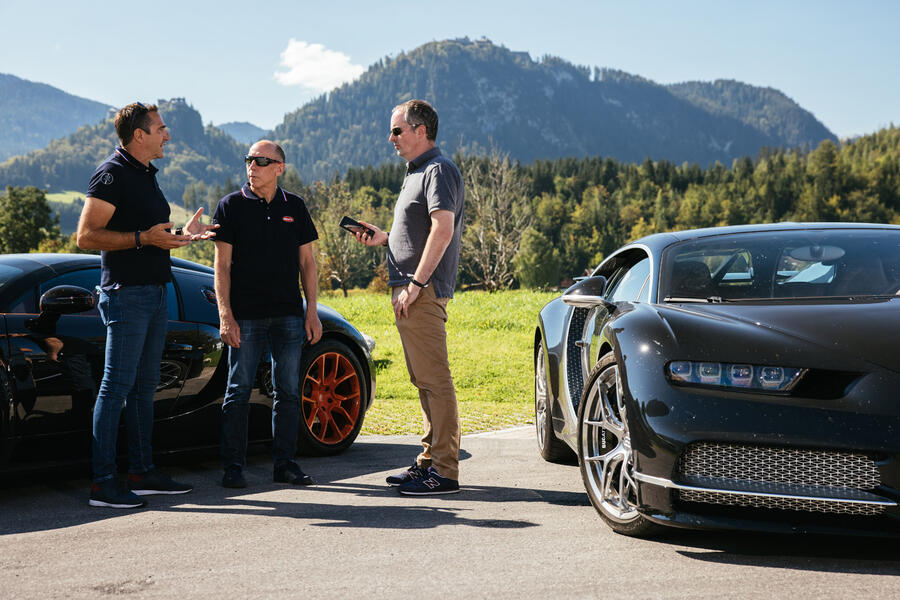
Any record attempt brings the weight of expectations. Raphanel says he was given a target based on what Bugatti’s engineers believed the car was capable of: more than 425kph (264mph). “But you arrive on the day of the record and there are 100 people there – you can’t go ‘sorry guys, I don’t feel like doing it today’,” he says. Wallace’s Chiron run nine years later came with a substantially higher target – that of breaking the 300mph barrier. The big issue being, as he explains, that entering the last day the top speed had stalled at a tantalisingly close 299.8mph. That, as he admits, “would have been a PR disaster”.

Both runs were carried out at Ehra-Lessien, with ultra-high speeds magnifying the effect of even tiny imperfections in the ultra-smooth surface. Raphanel’s attempt was done to satisfy the requirement for a two-way average. “You realise that just going the opposite way to the direction the track is used in makes a difference,” he remembers. “It’s like when you shave the wrong way: one way is smooth and the other is like the Tarmac makes little teeth, and these change the way the car feels and behaves.”

Going essentially the wrong way also negated the effectiveness of much of Ehra-Lessien’s carefully designed protection system. The high-speed track has a single barrier where speeds are lowest, rising to double then triple height along the REF straight. So on his reverse run, Raphanel’s peak speed came with the least protection. “If anything had happened where the speed was highest, I would have been in the forest,” he says.

Wallace went in only one direction, as Volkswagen subsequently decided to ban wrong-way high-speed running on safety grounds. But the Chiron’s greater velocities still revealed a more dramatic issue: a join between two different track surfaces that Wallace began to call ‘the jump’. “The engineers didn’t believe me,” he says, “then they looked at the data and realised that when the car was hitting it at 447kph (277.8mph) or so, it really was taking off.”

Any pioneer has to venture into the unknown – something that became more of an issue to Wallace as the Chiron’s peak speeds rose. “Before long at 400kph (248.5mph), my heart rate was normal, because we did 1000km (621 miles) of testing during the week to validate the simulated aero numbers that Dallara had done, and most of it was around there,” he says. “400kph still felt really calm and comfortable. But 450kph (279.6mph) never did.”

Wallace grew used to ‘the jump’ and to the tendency of the Chiron to wander on the more worn track surface that followed it, as well as the increasing influence of even modest crosswinds. But as the speeds rose, he found himself facing a new and unfamiliar one: the gyroscopic forces developed by the huge rotational speeds of the Chiron’s wheels.

“I’d liken it to a child’s spinning top,” Wallace explains. “When you steer a car normally, you have some self-centring from the caster. But the gyroscopic forces mean that if the car is going left, it wants to carry on and will continue until you make another input. So you steer the other way and, unless you get it perfect, the effect is magnified.”
That’s why the limiting factor for the Chiron wasn’t performance but rather Wallace’s confidence in keeping it on the road. “By the Thursday night, I was stuck. I just couldn’t go faster because, every time I reached that speed, I needed all three lanes,” Wallace remembers. “Over dinner, I said: ‘I’m just going to stay with my foot on the floor tomorrow until it passes the magic number, even if that means it’s too late to slow down for the banking. I’m going to do that because you can’t have a supercar that goes 299.8mph.’”

Fortunately, it didn’t come to that. On his final run, Wallace carried more speed onto the straight than he had before, felt more confident after the jump, then stayed flat out for as long as he dared (“at 135 metres per second, it’s really hard to judge braking distances”), slowing down just enough for the banking at the far end of the track and returning to the staging area to discover that he had managed nearly 305mph.

Raphanel acknowledges that setting his record was considerably less fraught but admits to having had worries about tyre life. He explains: “They had tested them on a bench machine at 435kph (270.2mph), because that’s all the machine could do: 435kph and a 20-second cycle. They said after six cycles, the tyres will probably explode, which of course means two minutes. But then when I broke the record, I noticed that the tyres were the same as I had used the day before; they said ‘you’re still in the window’. All I could do was hope: it’s not a window you want to fall out of.”

Bugatti says that it won’t defend its title, but if the company were to change its mind, would either of its record-setters be tempted to try again if Winkelmann phoned to offer them another go?

“‘Hello? Hello? Stephan? It’s a bad line, I can’t hear you,’” jokes Raphanel. “Personally, I was very happy to do this, to be part of history – but in my case, one time was enough. We did the records to show that Bugattis are the best cars in the world, not because we’re the best drivers.”

“When you’re a racing driver, if somebody asks you a question like that, you’ll always put on this persona of everything being good and say ‘bring it on’,” adds Wallace. “It’s easy to stand here knowing that we’re not going to do it and say ‘of course I would’. But in reality, it’s not just a straight yes: I would seriously have to think about it. It’s not just a walk in the park.”

The 10 fastest production cars (sort of)

While overall speed records are recorded and verified by the FIA, the production car title has always been subject to looser criteria and, like boxing, runs under what are effectively a variety of codes and self-appointed sanctioning bodies.

The big ideological division is now one that dates to the very beginning of record-setting: whether a car needs to run a course in two directions for an average time. Although Pierre-Henri Raphanel’s Bugatti Veyron Super Sport record was run in two directions at Ehra-Lessien, Volkswagen has since stopped these, meaning that two-way runs can only take place on either lesser tracks or public roads. Guinness World Records recognised Raphanel’s run as a record but not Andy Wallace’s later effort; instead, the Chiron’s time was validated by Germany’s TUV Technical Inspection Association.

Production status is another thorny issue, with some dissent as to whether the record-setting Chiron qualified; the modifications carried out to it inspired a Super Sport 300+ limited run, but it came after the record was set. The SSC Tuatara also struggles with the definition, as no customer cars have been delivered yet. Then there’s the matter of permitted modification, which was more liberal in the past; the acknowledged records of both the Jaguar XJ220 and McLaren F1 were set with raised rev limits.

With that in mind and with copious use of provisos, here are the top 10.

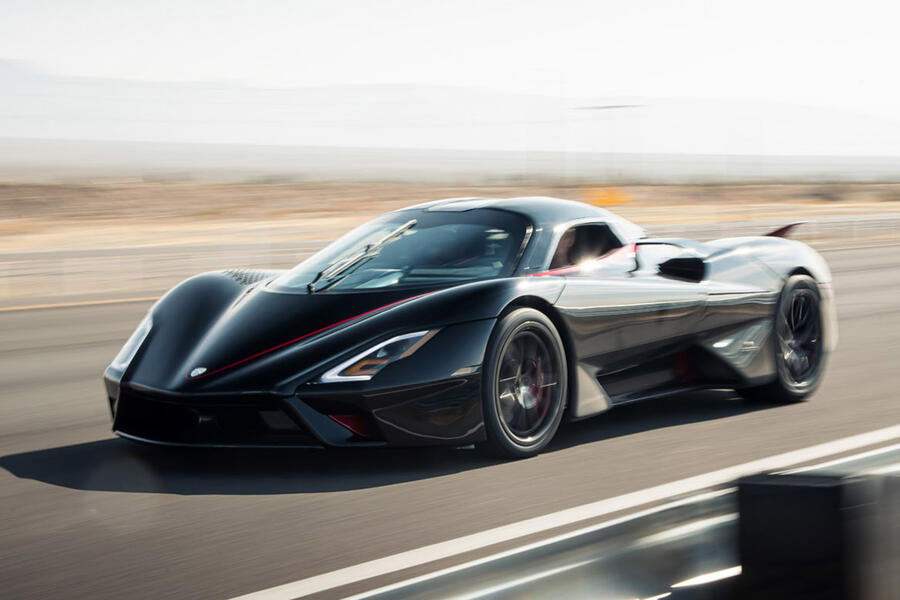
1 - SSC Tuatara

Year 2020 Speed 316.11mph Driver Oliver Webb Location Public road, Nevada, US Guinness World Record? No Proviso Claimed and awaiting verification. SSC plans to repeat due to controversy
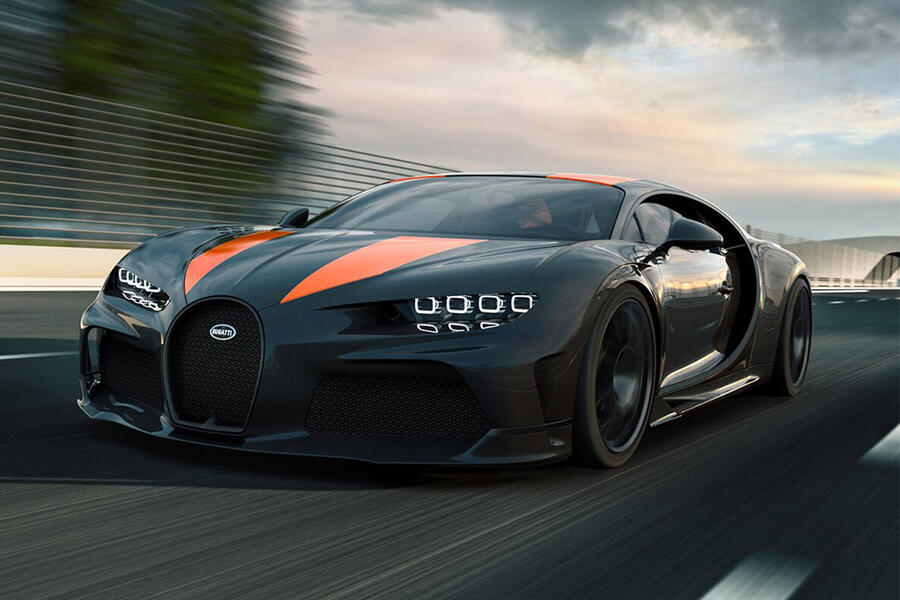
2 - Bugatti Chiron SS 330+

Year 2019 Speed 304.77mph Driver Andy Wallace Location Ehra-Lessien, Germany GWR? No
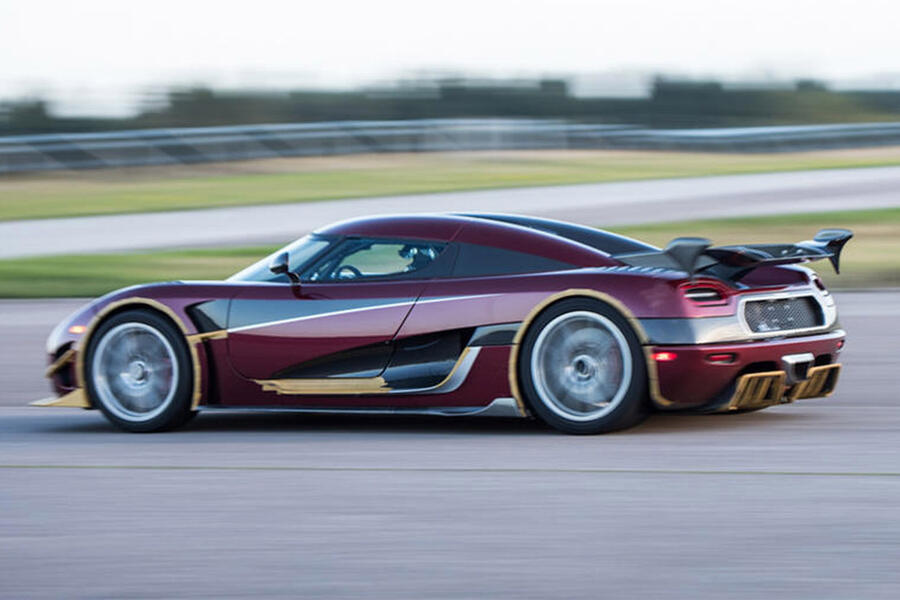
3 - Koenigsegg Agera RS

Year 2017 Speed 277.87mph Driver Niklas Lilja Location Public road, Nevada, US GWR? No Proviso Record request submitted but seemingly never given
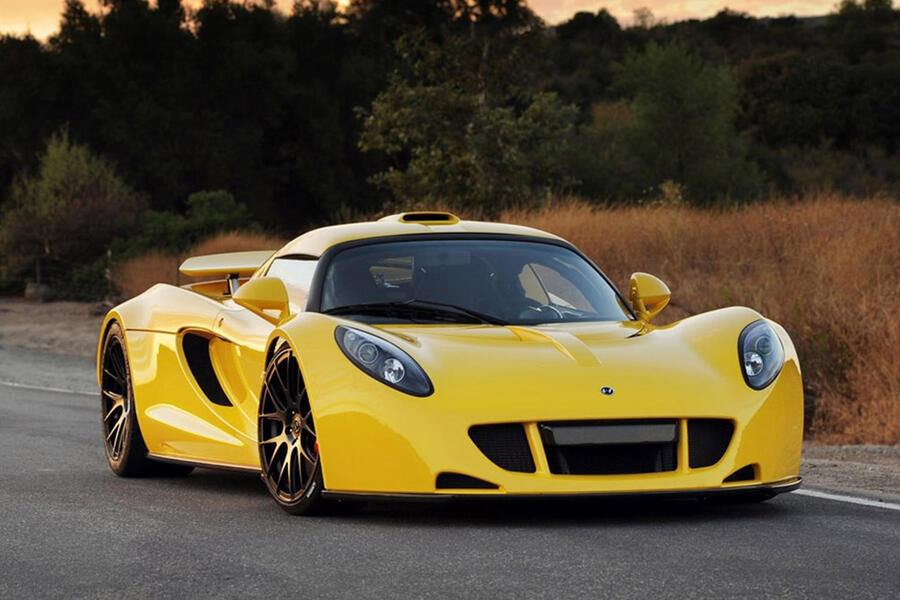
4 - Hennessey Venom GT

Year 2014 Speed 270.49mph Driver Brian Smith Location Kennedy Space Center, Florida, US GWR? No Proviso Not really series-production
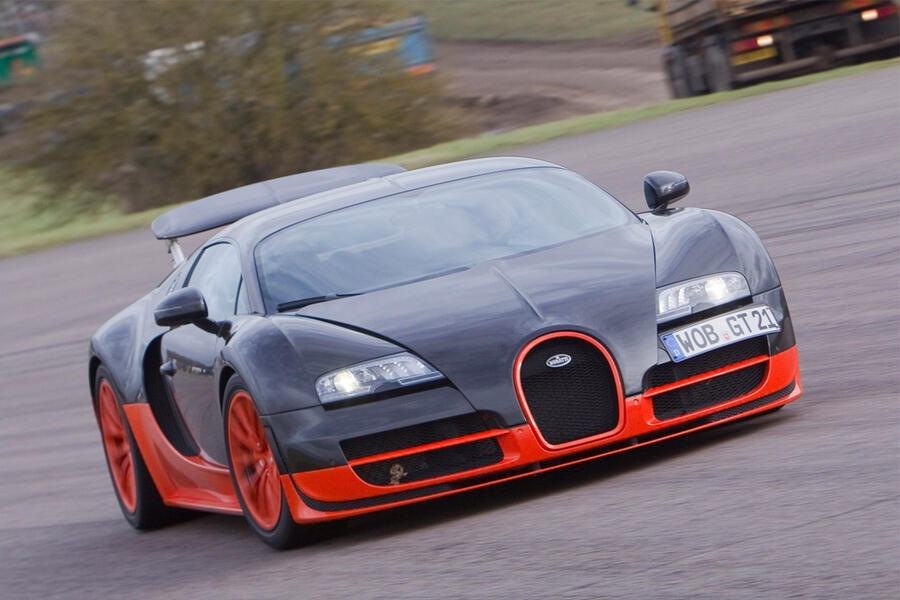
5 - Bugatti Veyron SS

Year 2010 Speed 267.9mph Driver Pierre-Henri Raphanel Location Ehra-Lessien, GWR?
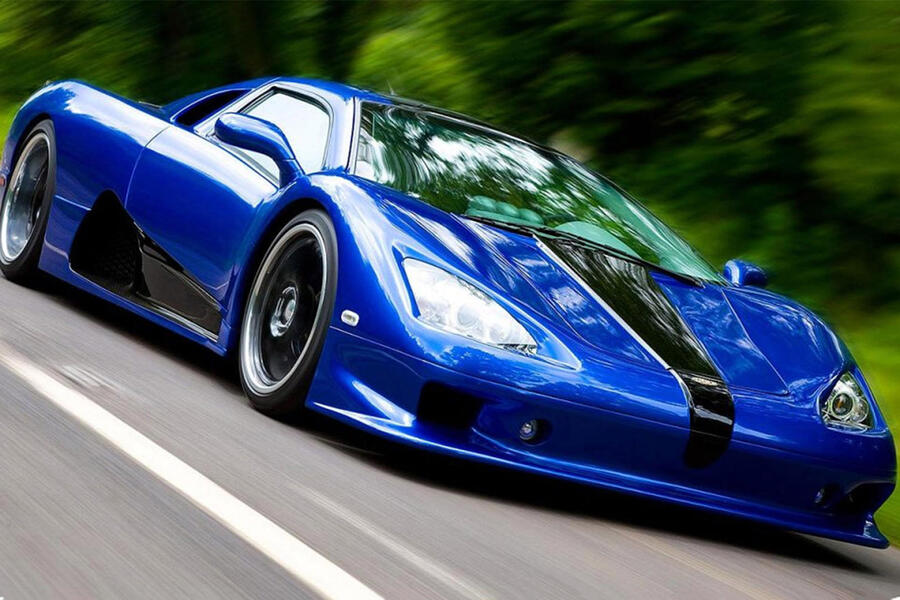
6 - SSC Ultimate Aero TT

Year 2007 Speed 256mph Driver Chuck Bigelow Location Public road, Washington, US GWR? Yes
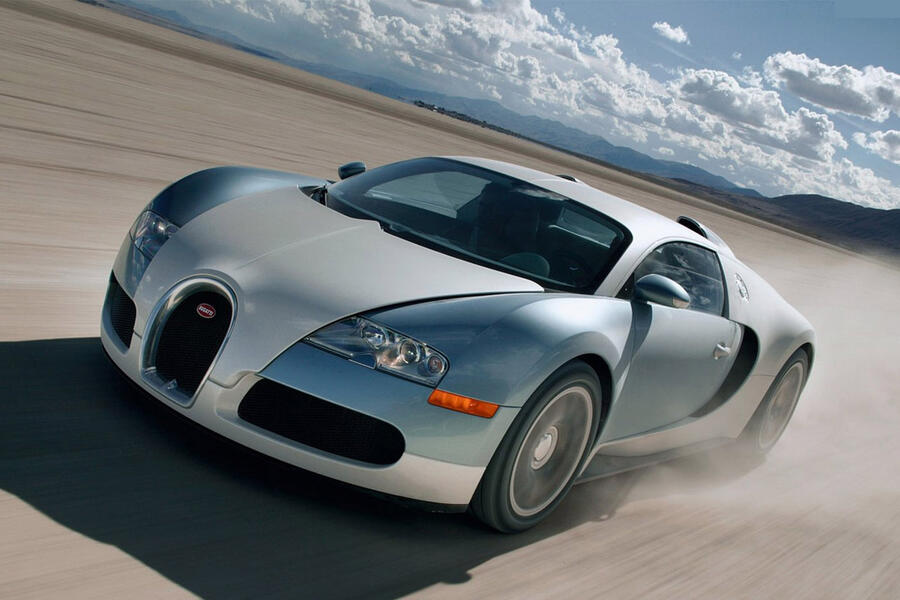
7 - Bugatti Veyron

Year 2005 Speed 253.8mph Driver Uwe Novacki Location Ehra-Lessien, Germany GWR? No
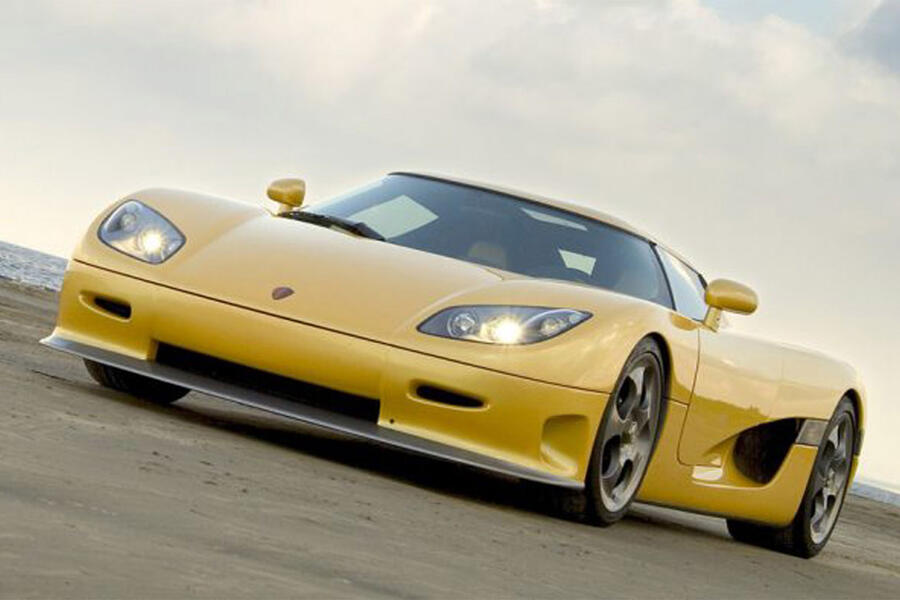
8 - Koenigsegg CCR

Year 2005 Speed 241.1mph Driver Loris Bicocchi Location Nardò, Italy GWR? Yes Proviso Rev limit raised and no cats
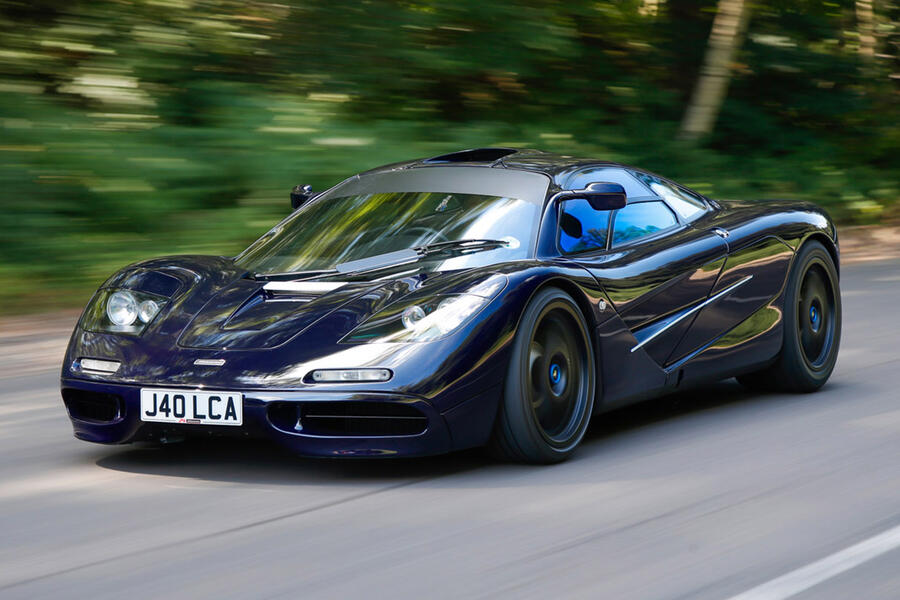
9 - McLaren F1

Year 1998 Speed 240.1mph Driver Andy Wallace Location Ehra-Lessien, Germany GWR? Yes Proviso Rev limit raised, having previously done 231mph
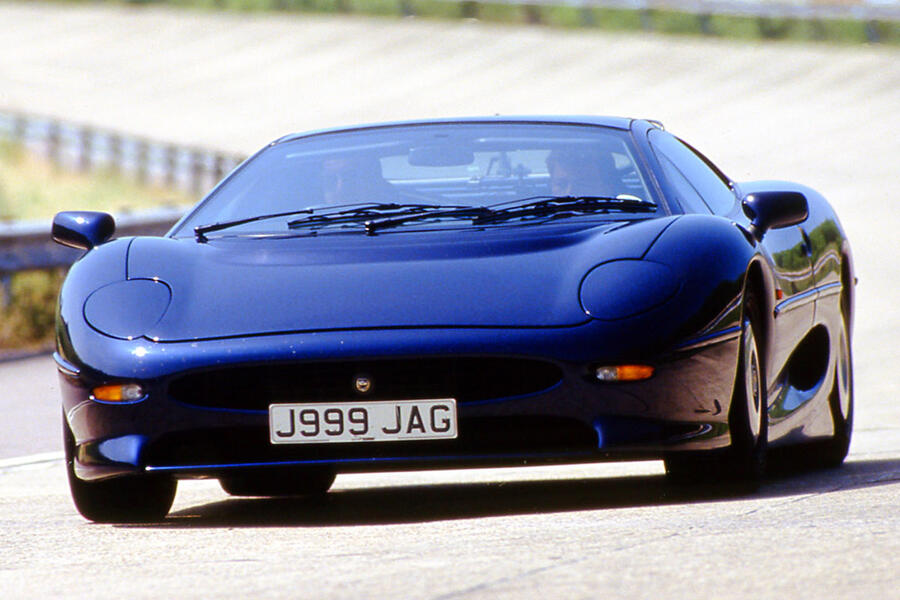
10 - Jaguar XJ220

Year 1992 Speed 217.1mph Driver Martin Brundle Location Fort Stockton, Texas, US GWR? Yes Proviso Rev limit raised and no cats
Tuesday, July 25, 2017

2017 BMW X5 M

The crossover-SUV scene may be erupting like ancient Mount Toba, threatening to snuff out myriad car species and altering the gene pools of some of the world’s most storied auto brands, including Bentley and Alfa Romeo. But that doesn’t mean performance will die off in a global cataclysm of porky soft-roaders. In fact, the sheer size of many crossovers affords them the space to package an armory of go-fast parts, and the 2017 BMW X5 M employs nearly all of them to be one of the nuttiest of the breed.
Spawned alongside the mechanically identical but less practical X6 M “four-door coupe,” this 5303-pound dreadnought has changed little since the second-generation model debuted for 2015. Its hot-vee 4.4-liter V-8 still nestles a pair of twin-scroll turbochargers between its cylinder banks, pumping out a heady 567 horses at 6500 rpm and 553 lb-ft of torque at just 2200. An M-tuned eight-speed automatic transmission continues to send power to an all-wheel-drive system capable of routing up to 100 percent of the thrust to either axle, with a torque-vectoring rear differential further metering the power between the rear wheels to quell understeer and sharpen handling.

A Genetic Anomaly

In essence, this volcanic people mover is everything that M cars traditionally have not been, even though BMW has fully embraced the turbocharged-automatic-AWD formula for the upcoming 2018 M5 supersedan. New for 2017: BMW’s iDrive interface now runs version 5.0 software and can be accessed via a touchscreen as well as the central control knob; the $4700 Executive package (adaptive LED headlights with automatic high-beams, soft-closing doors, a head-up display, a heated steering wheel, ventilated front seats, heated outboard rear seats, and concierge services) adds wireless device charging and a Wi-Fi hotspot; and buyers can now opt for BMW Individual’s metallic paint and special leather treatments.
Although its hunchback X6 counterpart is marginally quicker and grippier, the X5 M remains a genetic marker for when SUV evolution went full guano. Despite its tonnage and 192.7-inch length, this anabolic crossover has the moves to keep pace with BMW’s M3 sports sedan in nearly every dynamic measure: zero to 60 mph in 3.8 seconds, a 12.2-second quarter-mile run at 114 mph, a 153-foot stop from 70 mph, and 0.98 g of stick on our 300-foot skidpad. In our testing of its kind, only the Bentley Bentayga and the Tesla Model X P90D are quicker, and neither can approach the grip and rabid cornering ability of the BMW.
And it can drift. We don’t condone it on public roads, but load up the X5 M in a corner with its stability control deactivated and you can overpower the monstrous rear Michelin Pilot Super Sports (325/30ZR-21s with still massive 285/35ZR-21s in front) into a pronounced powerslide. The composure of your rear-seat passengers may vary.

Techno Overload

Driving the X5 M hard is not so much rewarding as it is hilarious to thumb your nose at the laws of physics. Here’s a 67.6-inch-tall shopping cart that can accommodate five people and 36 cubic feet of luggage yet can effortlessly storm down a twisty two-lane like a pyroclastic cloud. As with many modern BMWs, however, that performance comes with little satisfaction. The hefty and highly precise steering is short on the satisfying road feedback we’d like from a car this capable. Despite the V-8’s empowering gusto and willingness to peg its 7000-rpm redline, the synthesized thrum it emits is more eight-bit video game than $100K performance machine. And making sense of the dizzying array of vehicle-system adjustments can muddle the act of simply enjoying the X5 M on the road: Along with three increasingly aggressive settings for the gearbox in both its automatic and paddle-shifted manual modes, there are Comfort, Sport, and Sport+ setups for the steering weight, engine power, and adaptive-damper firmness. The two additional wheel-mounted M preset buttons that allow for saving your favorite blend of all these settings are helpful, but it’s still a bit overwhelming.
All of those tuning controls on the center console clutter an already busy interior layout awash with too many materials and finishes, albeit very nice ones. This X5 also features BMW M’s unintuitive stub of a shift lever that natural selection has yet to suppress; with no true detent or button for park, it’s best to treat it as a manual transmission and always use the electronic parking brake located on the console before exiting the vehicle. Other niggles include how difficult it is to find a comfortable driving position, despite the supportiveness and 18-way power adjustability of the front seats. And even with the standard, self-leveling rear air suspension, ride quality with the standard 21-inch wheels can be excessively stiff for something this posh. We’ve yet to sample either M SUV on the available 20-inchers and thicker-profile tires (a no-cost option), which might take some of the edge off this overly starched ride. That and the BMW’s high-strung demeanor let the latest Mercedes-AMG GLE63 S coupe beat the X6 M in a recent two-way comparison test.
This is normally where we’d chastise the fire-breathing brute for rapidly depleting the world’s oil reserves, which the X5 M will happily do with minimal prodding. But given its 14/19-mpg city/highway ratings, the 16 mpg we saw overall and the 20 mpg it returned on our 75-mph highway test are acceptable for a 2.5-ton rig with this much power.

The Cost of Evolution

Aside from our test car’s electric Long Beach Blue Metallic paint—which, along with the big wheels, gave it the bling of a prop fit for the set of Narcos—the X5 M exhibits the clean, understated look that its funkier sibling lacks. The flared, monochromatic bodywork is just racy enough for the hunkered-down stance and steamroller rubber yet won’t draw confounded stares from passersby. While it can’t match the curbside wattage of a $231,825 Bentayga, its aura is unmistakably rich, with tasteful blue ambient lighting inside, supple leather hides, and the feeling of spinning up a Learjet whenever you finger the start button. Six figures may be steep, but the BMW’s performance, fit and finish, and general attitude rarely have you questioning its $101,695 starting price.
The X5 M’s list of standard features encompasses most of the SUV genome, with our $111,195 example also including the aforementioned Executive package, plus $2300 for night vision with pedestrian detection, a $1700 Driver Assistance Plus package (blind-spot detection, lane-departure warning, automated emergency braking, rear cross-traffic alert, and a 360-degree camera setup), a $500 parking-assist system, and $300 for Apple CarPlay connectivity.

Purists still will find the X5 M less than ideal—this BMW’s performance is impressive more in the context of its utility-vehicle core than it stems from actual engagement behind the wheel—but the crossover apocalypse does seem less threatening with this vehicle around. A next-gen X5 M on the horizon (which we’ve already spied testing near the Nürburgring) and soon-to-be-updated competitors from Jeep, Mercedes-AMG, and Porsche ensure that this mutant branch of the SUV family tree will only grow stronger.

Aston Martin Vanquish Zagato Volante and Speedster spotted testing

Soft-top and roofless versions of Aston Martin’s limited-edition V12 sports car will be produced in a run of 99 and 28 units respectively

Aston Martin Vanquish Zagato Volante and Speedster spotted testing
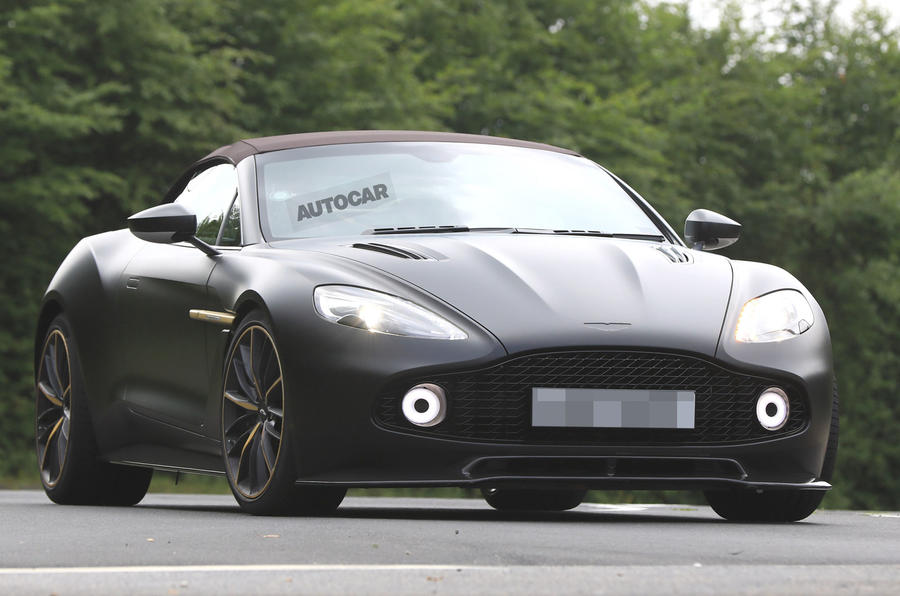
Aston Martin is adding the finishing touches to its limited-edition Vanquish Zagato Volante and Speedster models, ahead of planned customer deliveries next year.
The two drop-top versions of the Vanquish Zagato coupé will be produced in partnership with world-renowned Italian design house Zagato in a total of just 127 units: 99 Volantes and 28 Speedsters.
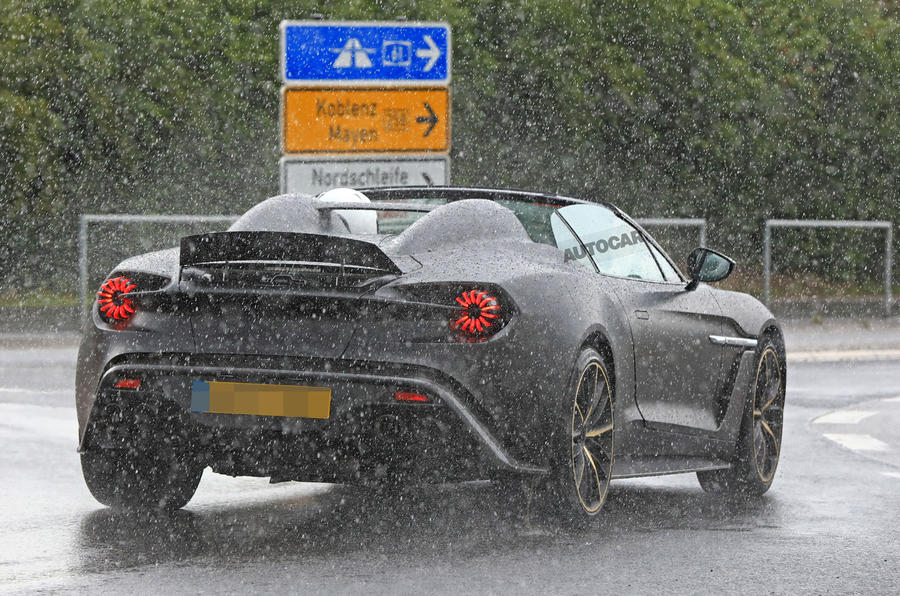
The Volante gets a folding soft-top and the Speedster (pictured below) ditches a roof altogether, in a similar vein to the Aston Martin DB AR1 of 2003. The models also clearly take influence from the Aston Martin Vulcan, One-77, CC-100 and DB7 Zagato.
First sightings of the models undergoing pre-production testing in the rain suggest Aston Martin used the time to assess waterproofing and, in the topless Speedster, the cabin's weatherproofing.
The limited-run V12 models use the same naturally aspirated 5.9-litre engine as the Vanquish Zagato coupé, with a maximum power output of 592bhp - 27bhp more than the regular Vanquish.
The Zagato Volante can sprint from 0-60mph in 3.7sec, but losing the convertible roof in the Speedster would decrease this time. Top speed will be about 197mph.
The Speedster will command the highest price, at about £1.3 million; the Volante is expected to cost more than £500,000. Of the 28 Speedsters to be made, just seven are destined for the UK.

Caterham Seven 420R Donington Edition 2017 review


Limited-edition road-legal Caterham track car is a superbly enthralling drive, with enough creature comforts to be used on the road as well. Even more addictive than most of its rangemates

What is it?

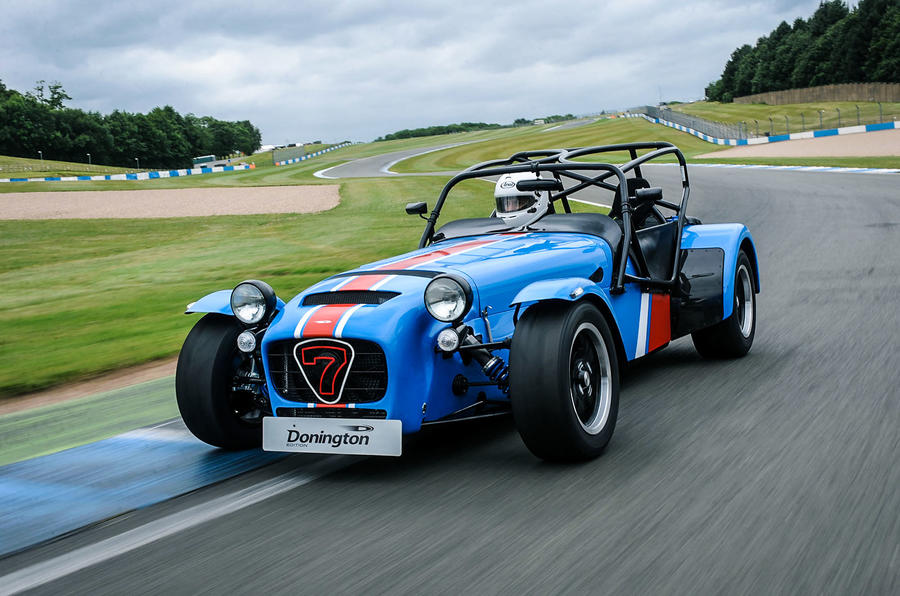
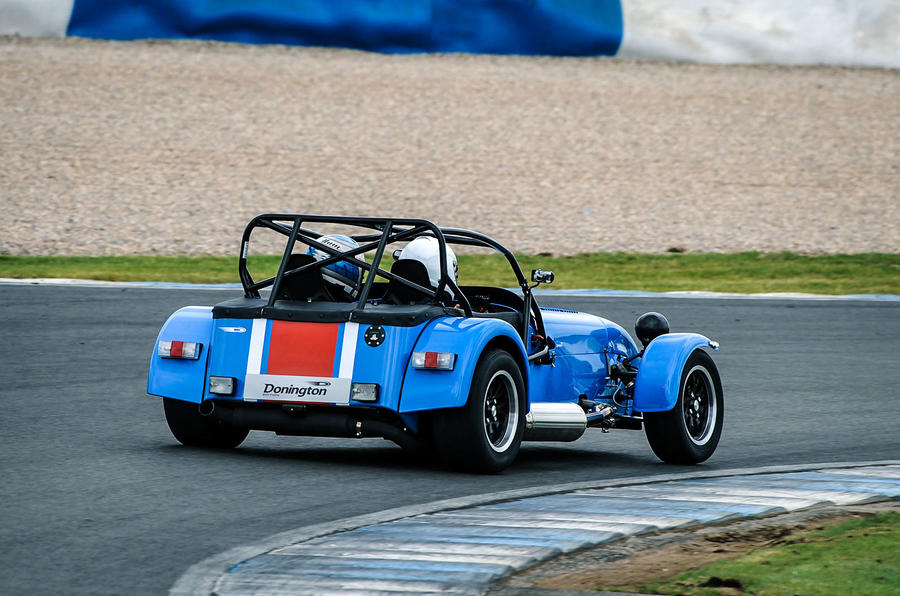
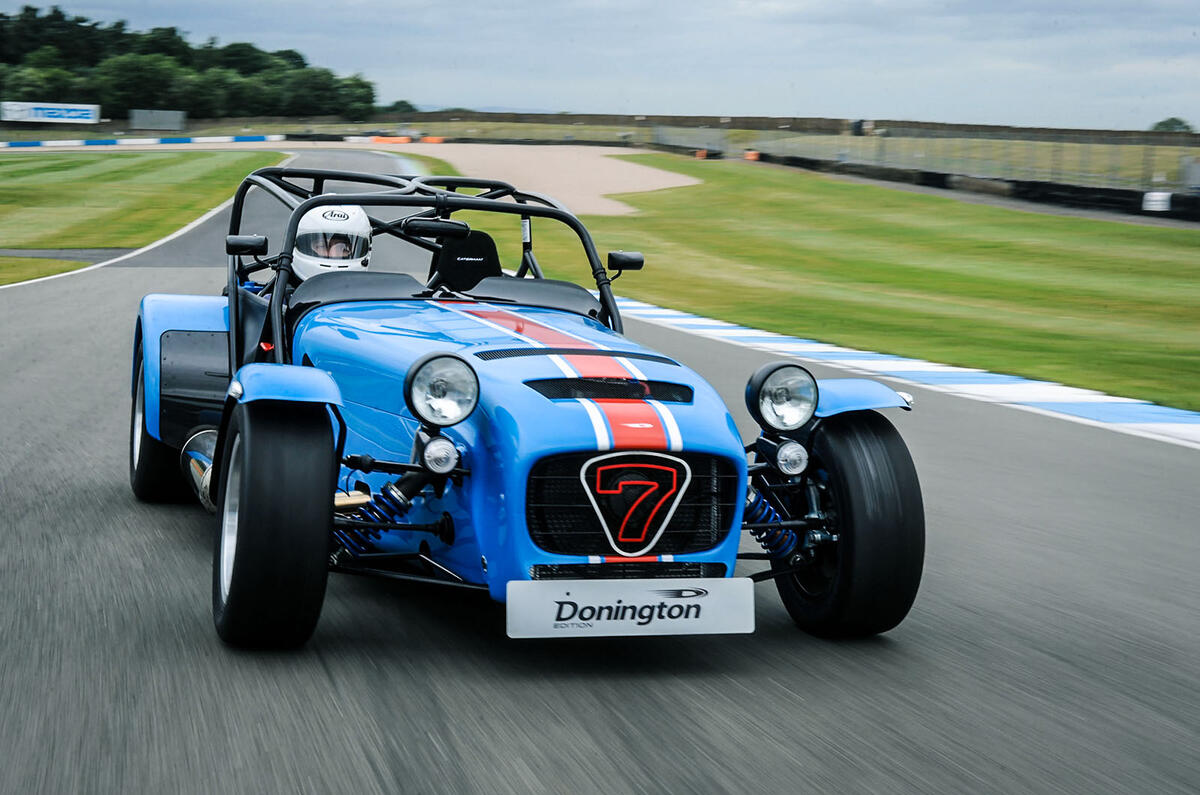
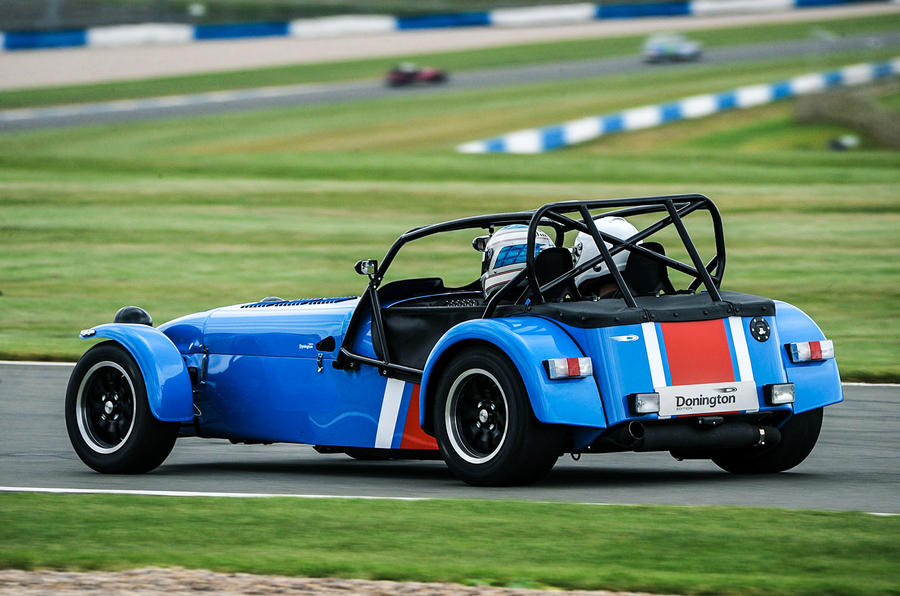
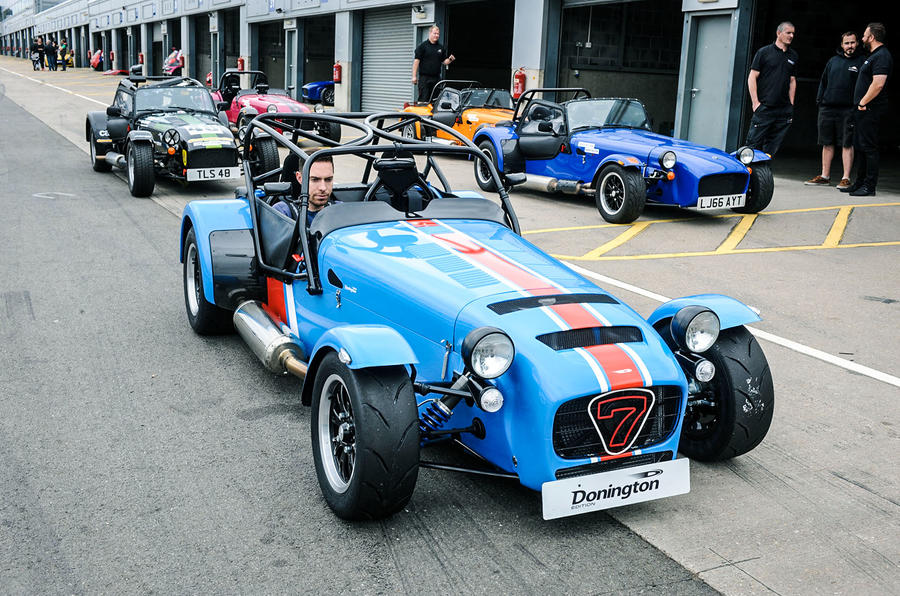
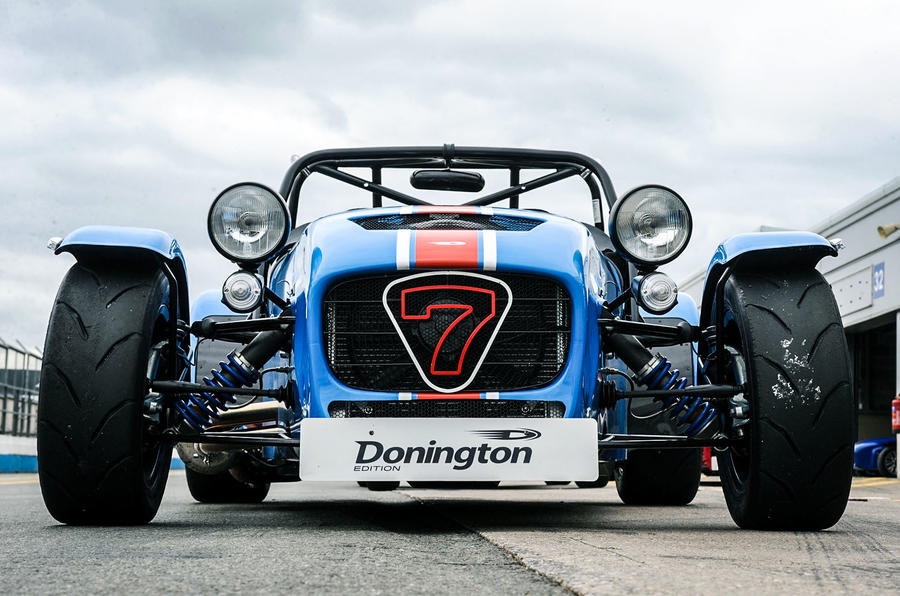
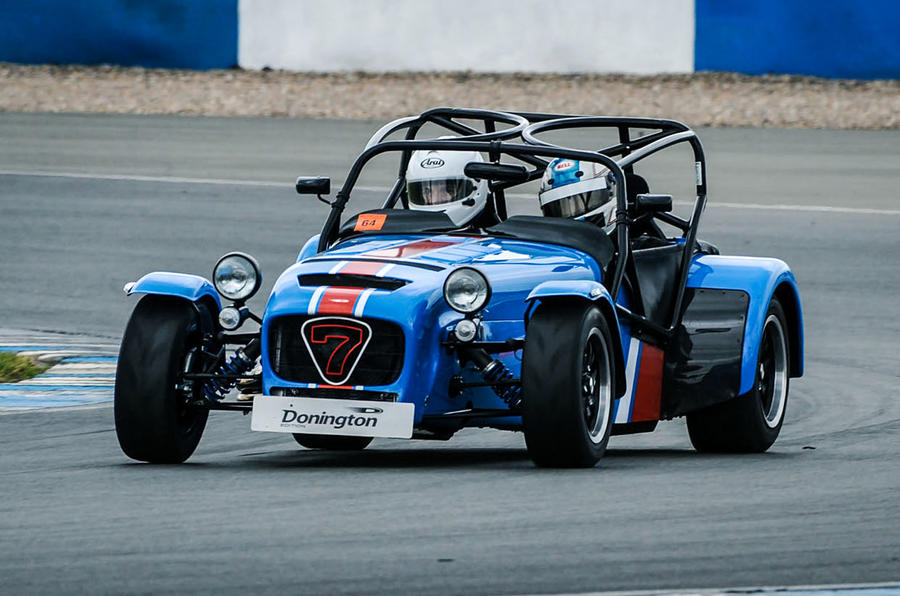
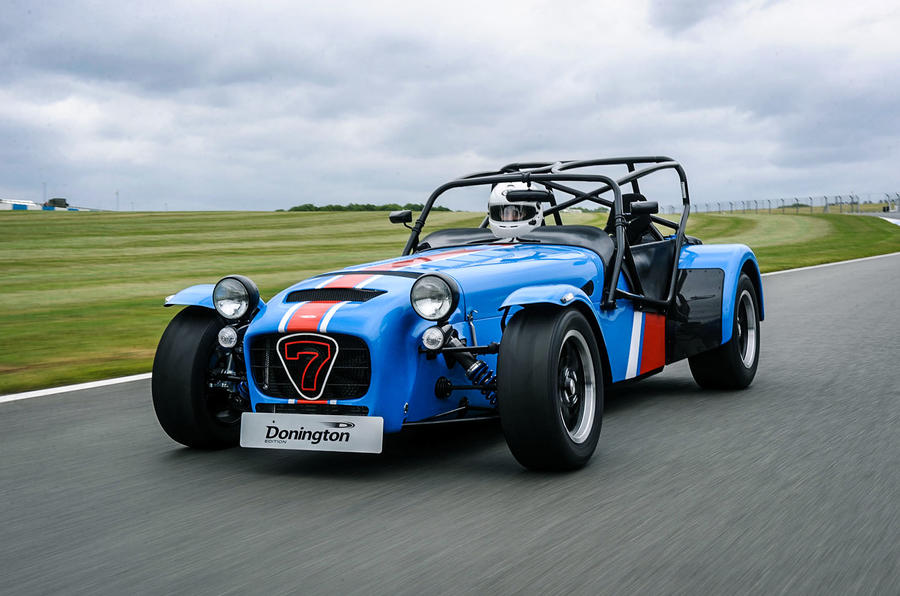
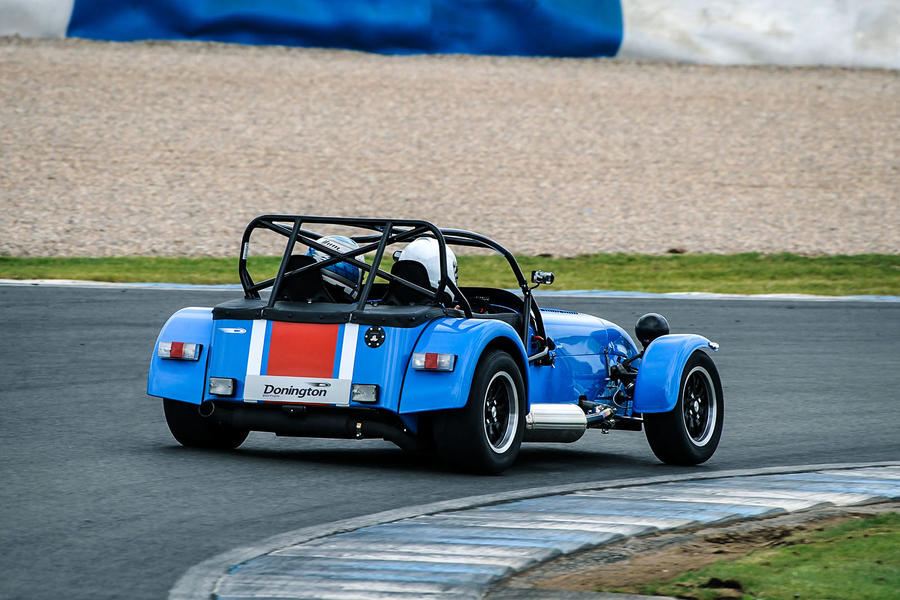
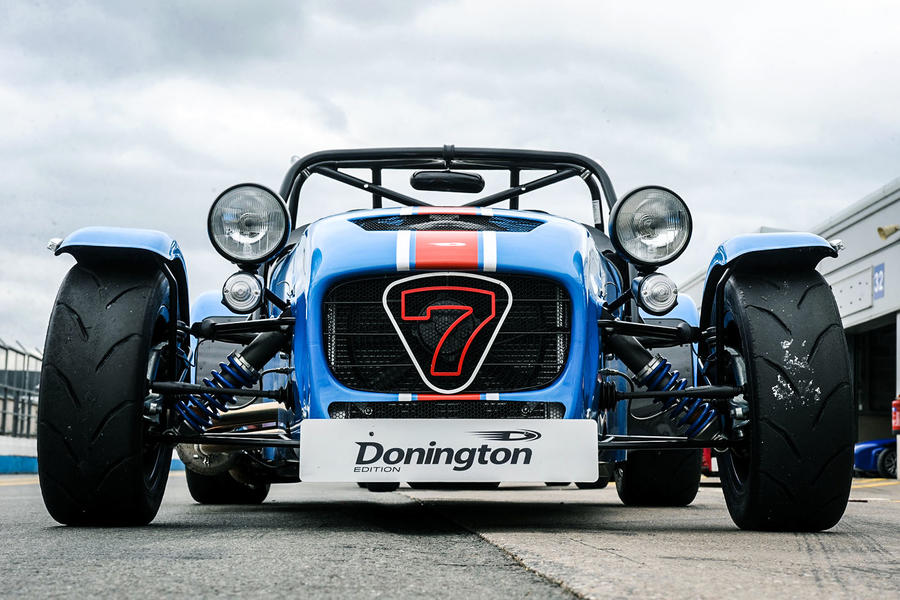
If you’re familiar with Donington Park, you might just recognise this car’s colour scheme: the blue and white of the circuit’s kerbs and tyre walls and the flash of red that’s borrowed from its logo. This is the Caterham Seven 420R Donington Edition, a car that jointly celebrates 60 years of Caterham Cars and 40 years since the reopening of one of Britain’s prettiest circuits.
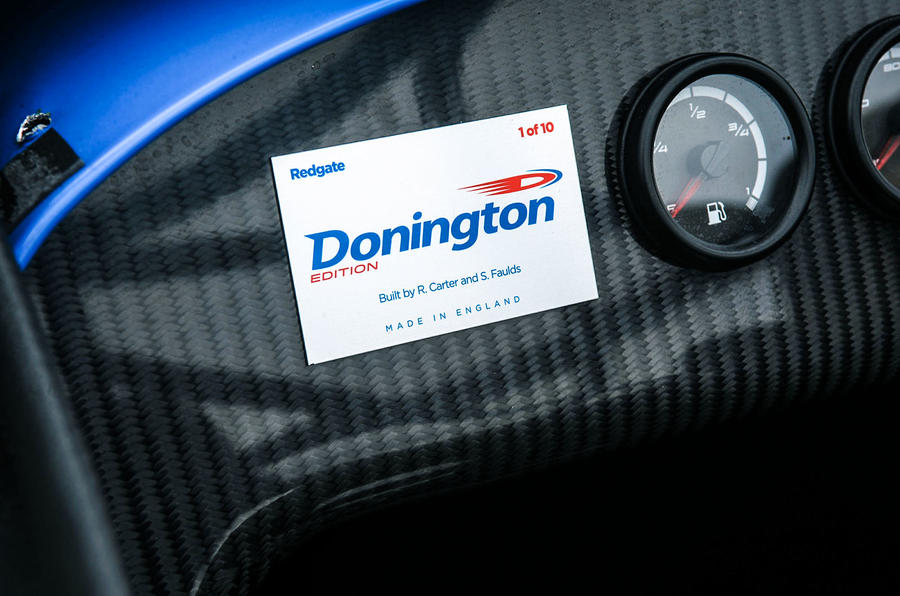
Rather than being a full factory model, the Donington Edition is the work of BookaTrack Caterham (for the uninitiated, BookaTrack is the renowned trackday company that recently secured the Midlands Caterham franchise, its showroom located at Donington Park). Just 10 such cars will be built, priced at £47,500 apiece, with orders being taken now.
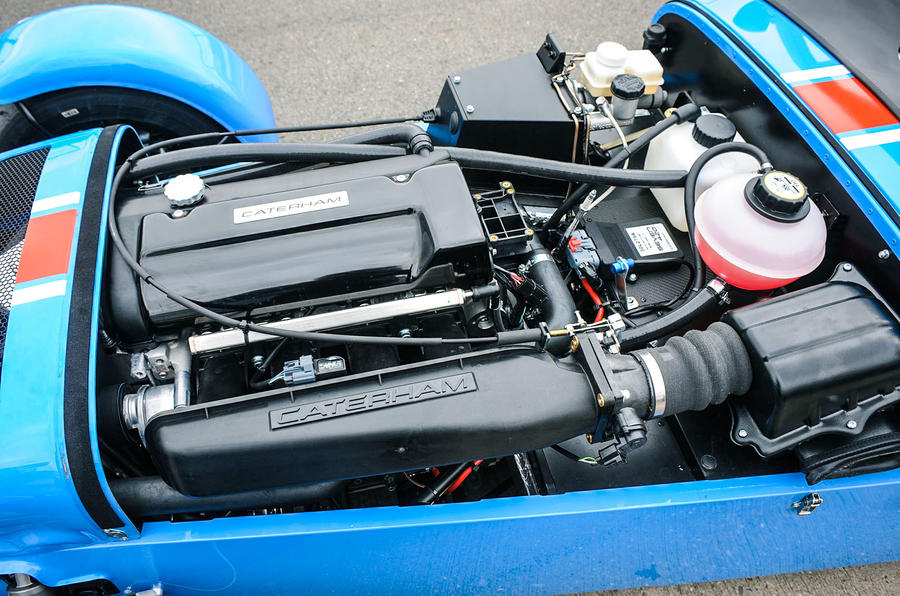
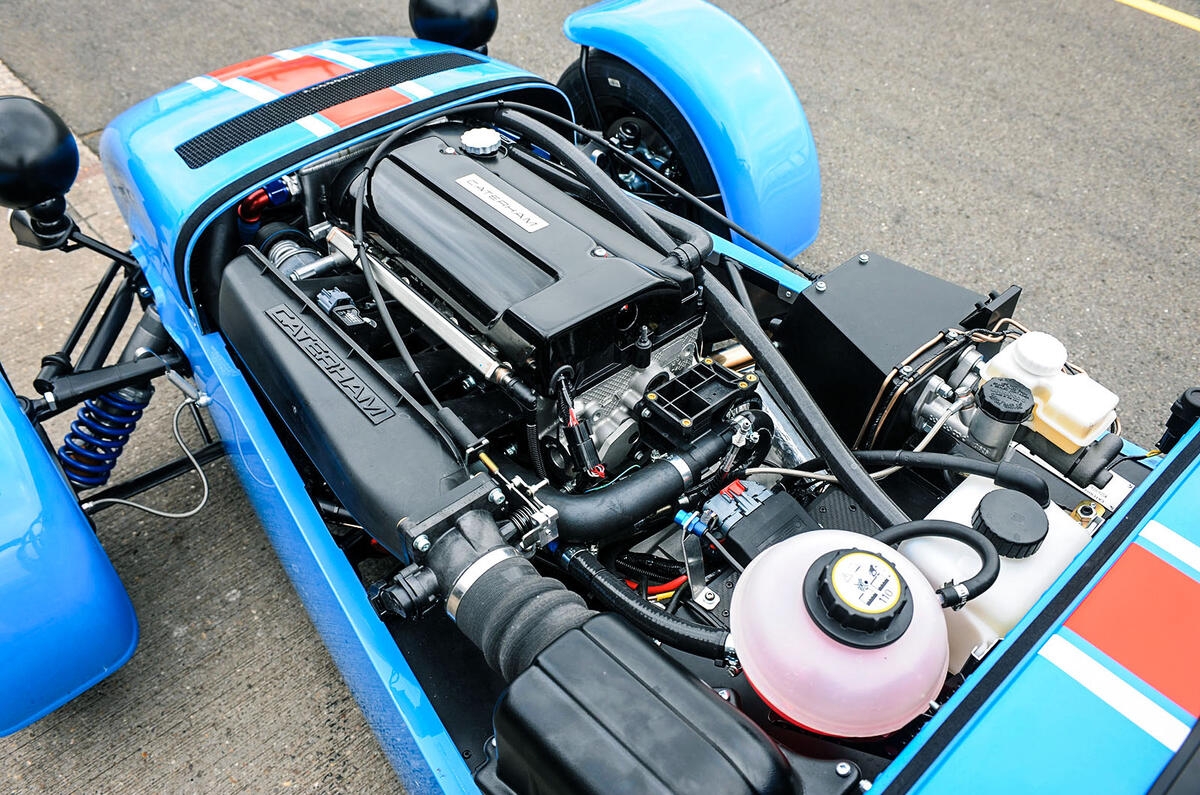
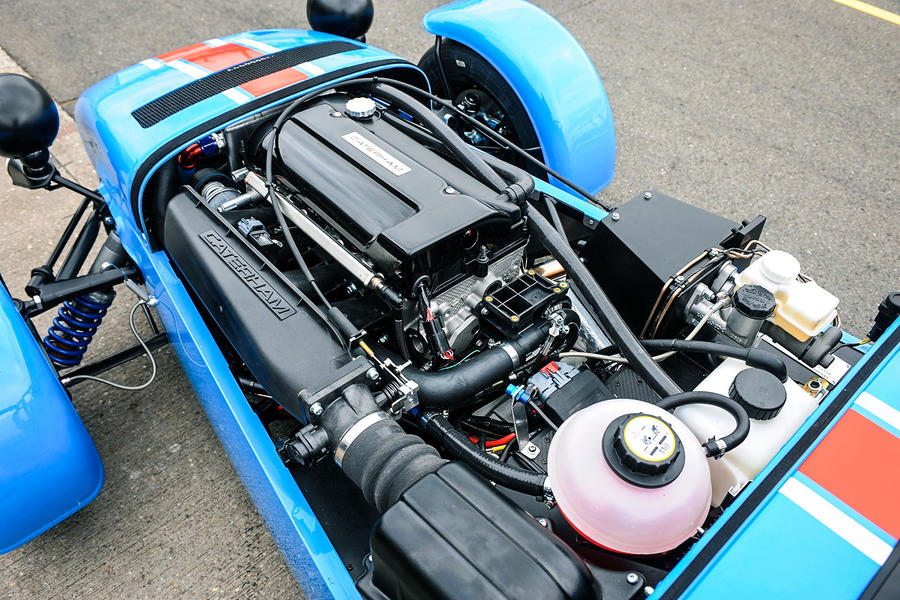
The 420R sits right below the unhinged 620R in the Caterham line-up. It doesn’t have the supercharged model’s frenzied power output but, with 210bhp from its 2.0-litre Ford Duratec motor, and weighing no more than 560kg, it is still terrifyingly fast. In fact, its power-to-weight ratio is comparable to that of a McLaren 570GT.
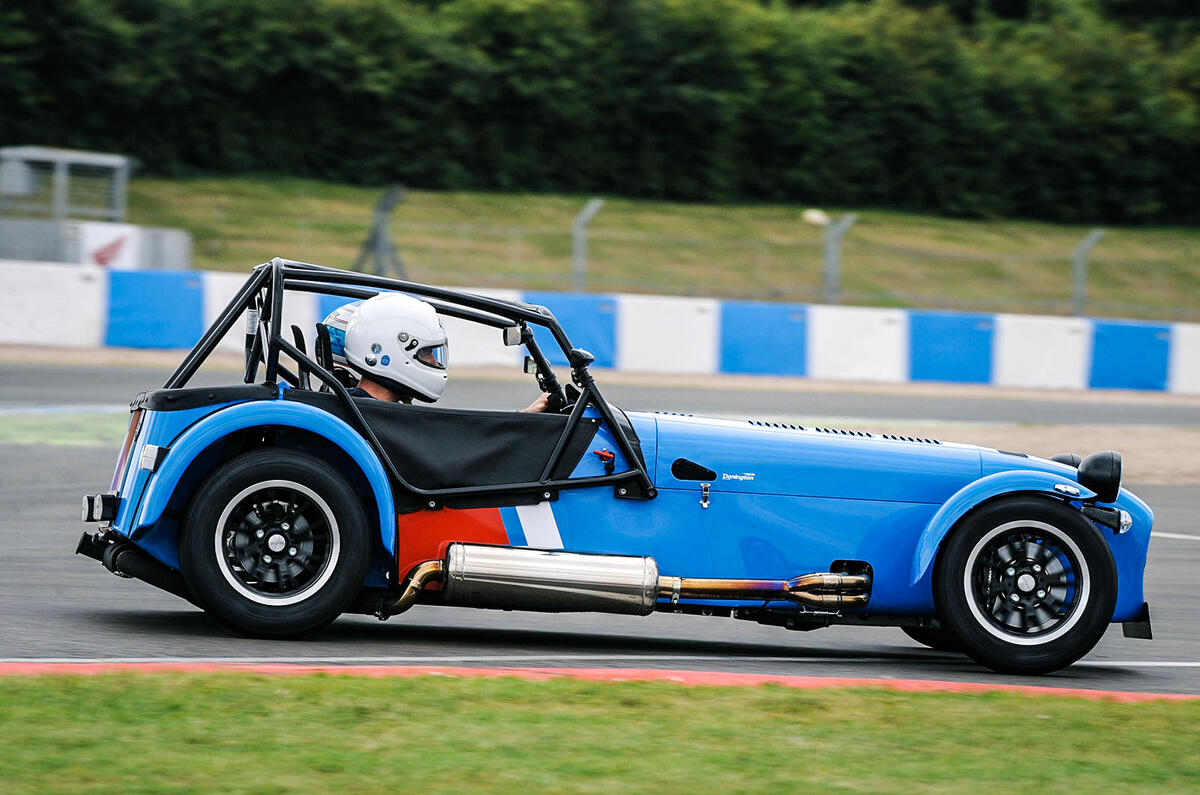
The Donington Edition isn’t just a 420R with a new colour scheme, though. Unlike the regular model, it uses a six-speed sequential gearbox (the same transmission that’s found in the 620R and Caterham’s top-spec racing cars). It also has a competition roll cage and aero screen – there’s no windscreen or roof option whatsoever – as well as racing springs and dampers. The suspension rates and geometry have been tuned specifically for this model.
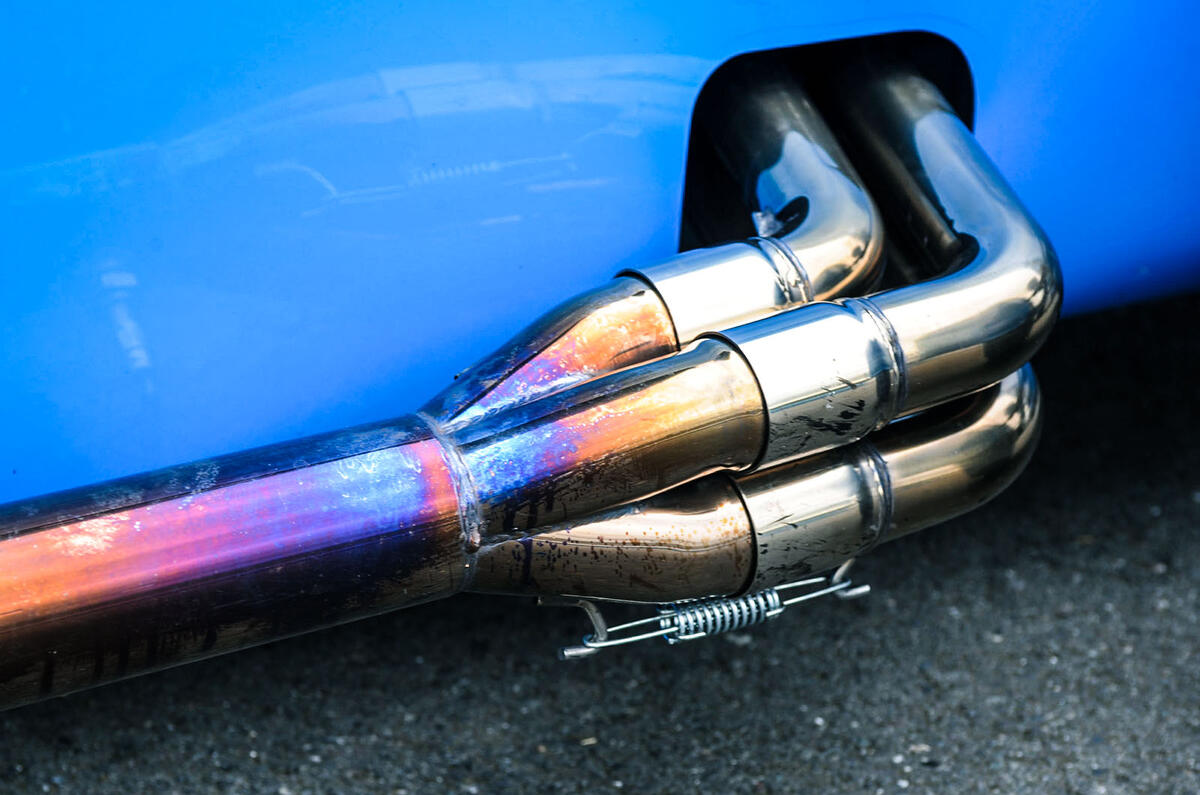
In fact, in many ways, the Donington Edition is simply a road-legal version of the cars that compete in Caterham’s top-flight racing category (until last year, the series was labelled R300-S, but for 2017 it was rebranded 420R to bring it in line with the company’s range of road cars). The differences between the two Sevens are minimal: the Donington Edition still uses a race clutch but it’s not as tricky as the competition car’s; it features a rear exit exhaust that complies with trackday noise limits; and it does away with the racing car’s expensive carbonfibre wings. There are a handful of other minor differences, too, but as far as all the stuff that determines the driving experience goes, the two cars are basically one and the same.  

What's it like?

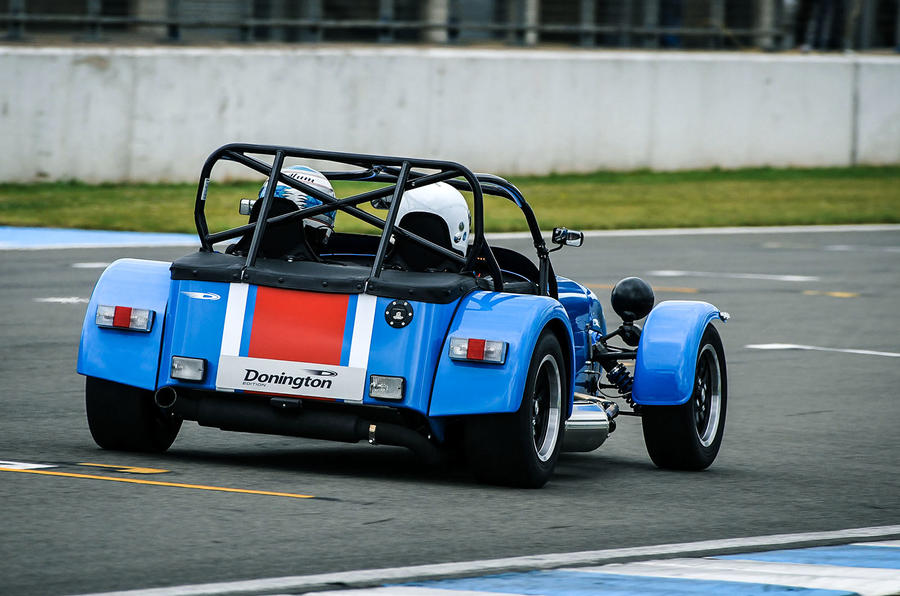
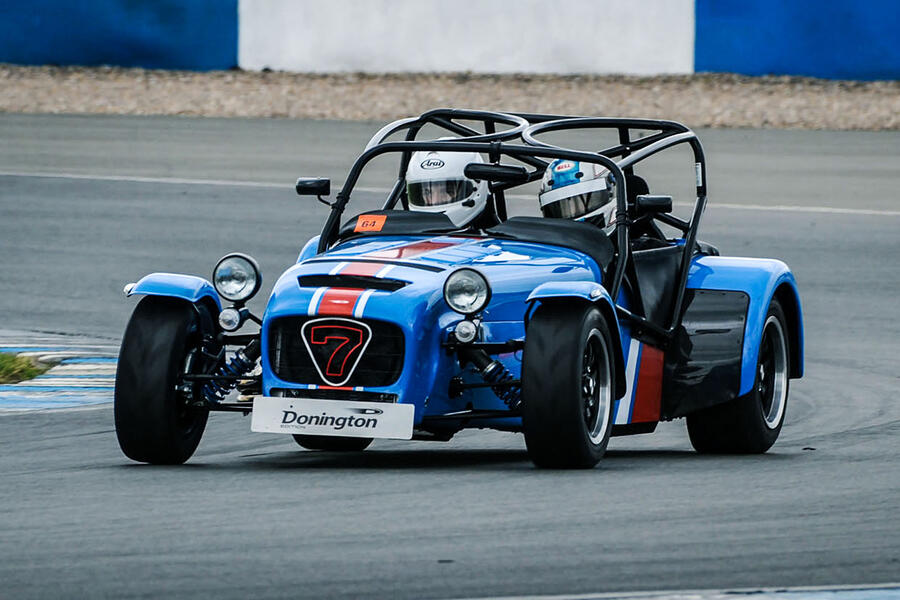
It’s no wonder the Donington Edition feels a lot like the 420R competition car from behind the wheel, then. It has the same frantic straight-line speed and the same on-the-nose feel in the corners. In fact, it’s every bit as intoxicating on circuit as the full competition car, every bit as much fun to hustle around a lap. All that’s missing is a handful of identical cars over your shoulder desperately trying to find a way past.
"We wanted to bring the 420R racing car experience to trackday drivers in a road-legal model," says Stuart Foulds, the BookaTrack Caterham workshop manager who developed the car and will personally build all 10 examples. "We set out to make an accessible but fast trackday car. It’s almost as quick as the racing car, but it’s fairly easy to drive and it isn’t on a knife-edge. It doesn’t have any weather protection so I don’t envisage them being used on the road much, but it is actually pretty good to drive on the road. I hope in 20 or 30 years, it’ll be a sought-after model."
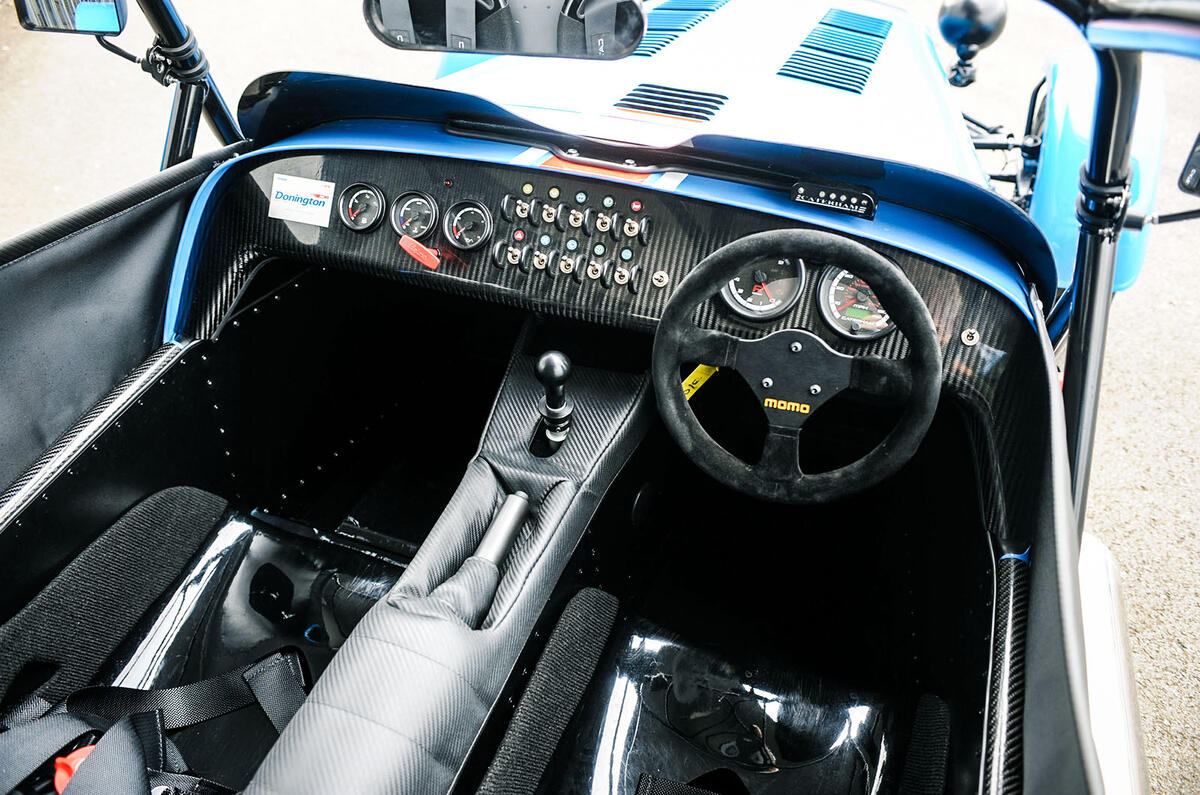
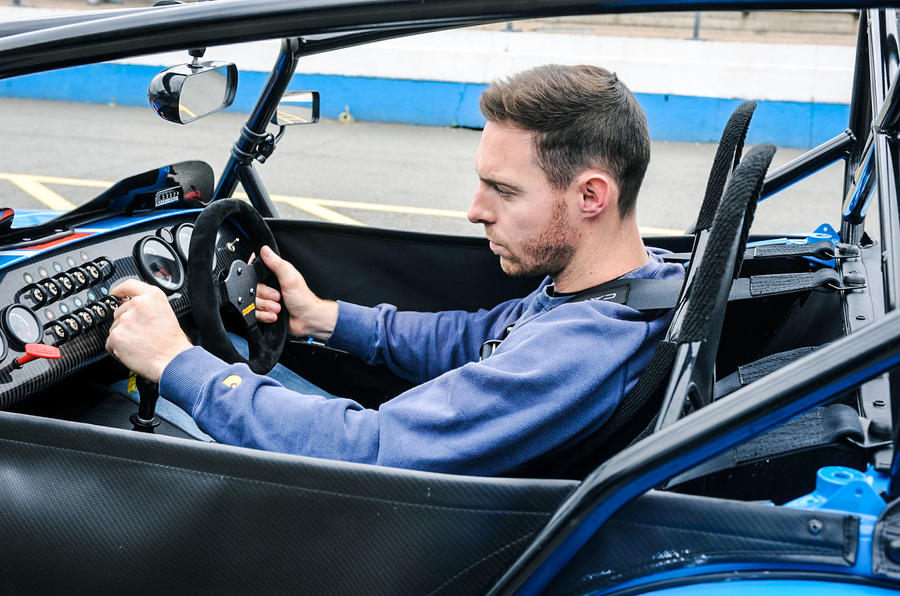
The Donington Edition is Foulds’ idea of the perfect trackday Seven. It therefore cherry-picks the most track-appropriate components from the Caterham range; the 620R nose cone with its bigger oil cooler; the ultra-sticky Avon ZZR tyres; a plumbed-in fire extinguisher; and a limited slip differential. It also borrows the 620R’s carbonfibre dashboard and each car will carry a plaque with the name of one of Donington Park’s corners inscribed on it. The car is also available with the longer, wider SV chassis.
As you lower yourself down into the cabin through the intricate cat’s cradle roll cage, you’d swear you were getting into the competition car. Once in, though, you quickly notice the differences. Whereas the racing car uses sections of foam that are moulded for each individual driver, the Donington Edition favours conventional seats. And whereas the racing car features fiddly six-point harnesses, this car uses a simpler four-point system. The dashboard is also peppered with buttons for headlights and heaters that you don’t get on the competition car. 
You forget all of those minor differences within two sharp tugs of the sequential gearlever, though. The Donington Edition captures all of the focus and intensity of the competition car and you soon find yourself getting faster and braver with every lap, just as you do in the racing car. You know when you’re getting on top of a track-focused Caterham when you start taking corners a gear higher. You soon realise that bends you had approached in third were better taken in fourth; you carry more speed in, keeping the car up on its toes through the corner rather than overkilling it and letting it sit down, which means you’re travelling way faster come the exit too. That’s when lap times start to drop.
Track driving can sometimes feel like you’re merely pointing a car from braking point to apex, and then to some point out on the exit in a disjointed, inelegant two-step. But when you feel the car flowing through corners, when you link one bend with the next in a smooth and graceful dance, you realise what it’s all about. Once you start getting on top of it, the Donington Edition flows beautifully.  
It isn’t particularly physical to drive, but it does demand all of your attention. There’s enough roll and lean built into the chassis that you can feel it working beneath you, just like the competition car, but whereas the racer can be quite snappy at the limit, the Donington Edition is altogether friendlier and more approachable. When it starts to slide, it does so progressively and it can be held in a drift, rather than spinning suddenly or violently snapping straight again.
Even so, this car has so much front end that you can agitate the rear just by turning in too abruptly. That aggressive balance gives it massive turn-in ability and huge cornering grip. The brakes, meanwhile, take just about as much pedal force as you can muster once the tyres are warm and they simply never fade.
What really makes the Donington Edition feel like the racing car, though, is the drivetrain. The engine is raw and dramatic, revving out with a frantic top end. Pulling gear after gear with your foot flat on the accelerator, clutch pedal untouched, is just so exciting, and banging down through the gears as you approach a corner with just a kick of the clutch pedal actually makes you feel like a racing driver. 

Should I buy one?

The more pertinent question may be: "Why not just go racing?" Lining up on a grid with a car beside you and a number on your nose cone is still the most thrilling Caterham experience money can buy.
But the 420R Donington Edition is a very fine substitute that you don't need a trailer to transport to and from your circuit of choice, or even to go racing to enjoy.
Caterham Seven 420R Donington Edition Location Donington Park, UK On sale Now Price £47,500 Price as tested £47,500 Engine 4cyls in line, 1999cc, petrol Power 210bhp at 7600rpm Torque 150lb ft at 6300rpm Gearbox 6-spd sequential Kerb weight 560kg 0-62mph 3.8sec (estimated) Top speed 136mph Fuel economy n/a CO2 rating n/a Rivals Ariel Atom 3.5 Supercharged, Lotus Elise Cup 250