Volvo recently launched the all-new Volvo XC90. The top of the
range luxury SUV is a completely new development and comes with three
different engine variants. We drove the 2016 Volvo XC90 D5 AWD Diesel
for this review.
The new Volvo XC90 is the first model based on the new Scalable
Product Architecture. Similar to the ‘Baukasten’ system in use at the
Volkswagen Group this allows for multiple models to share the same basic
architecture. In the near future the V70 and S80 will also use this SPA
and at the same time are regrouped under the ’90’ model line.
The new Volvo XC90 will be launched with three different engines. The
flagship model is the Volvo XC90 T8 Twin-engine plug-in hybrid with a
combined power output of 407hp and 640Nm of torque (0-100 km/h in 5,6
seconds / top speed 230 km/h). Than there is the Volvo XC90 T6 AWD
petrol engine with 320hp and 400Nm of torque (0-100 km/h in 6,5 seconds /
top speed 230 km/h) and last but not least ‘our’ Volvo XC90 D5 AWD
diesel with 225hp and 470Nm of torque (0-100 km/h in 7,8 seconds / top
speed 210 km/h).
All new XC90s come with a 8-Speed Geartronic gearbox and entirely
new front- and rear suspension setup. At the rear the typical vertical
springs and dampers have been replaced with horizontal springs which
increase the size of the luggage compartment. Optionally you can equip
the XC90 with 7 seats. The rear seats can be folded in a 40:20:40 split
as standard.
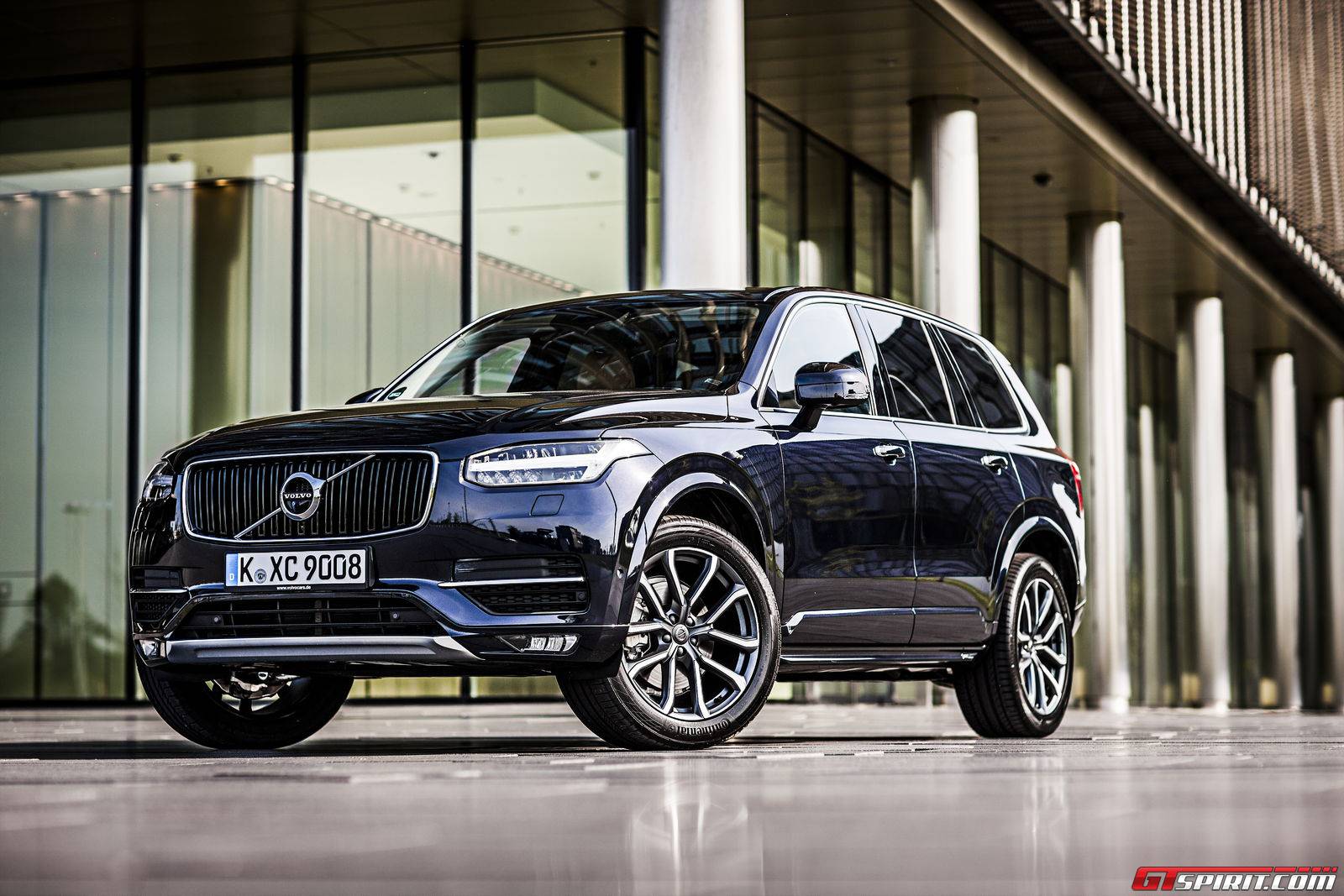
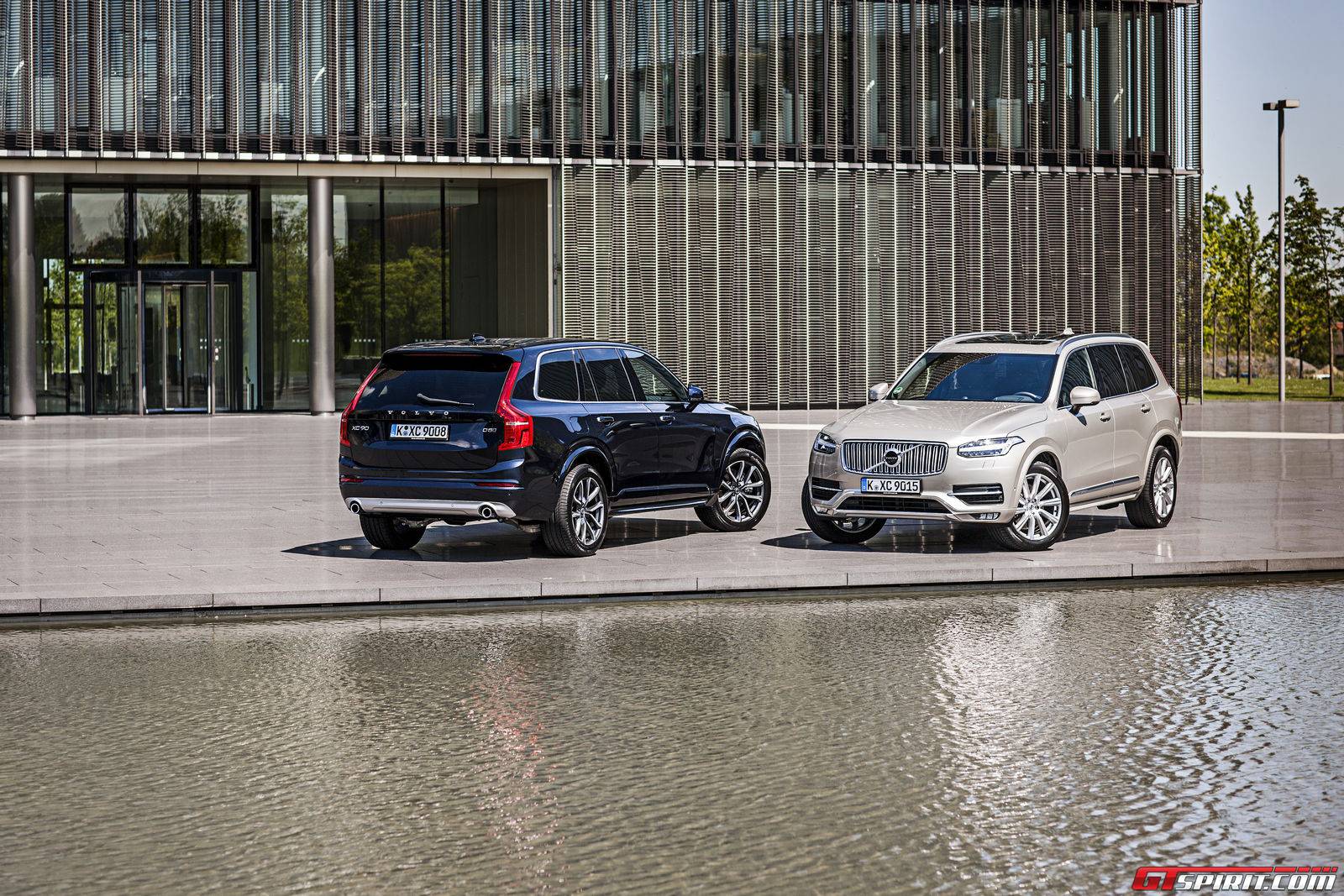
The Volvo XC90 is the first car to sport the new Volvo design
language. The front we particularly like. It is well proportioned and
looks small in pictures but in real life there is no denying the XC90 is
huge.
Inside, the large exterior dimensions have clear benefits. The
seating position is high and there is plenty of space for tall people.
The seats offer good support and are among the thinnest we have seen.
This adds to the leg space of the rear passengers. When necessary the
rear seats can be moved forward to add more luggage space.

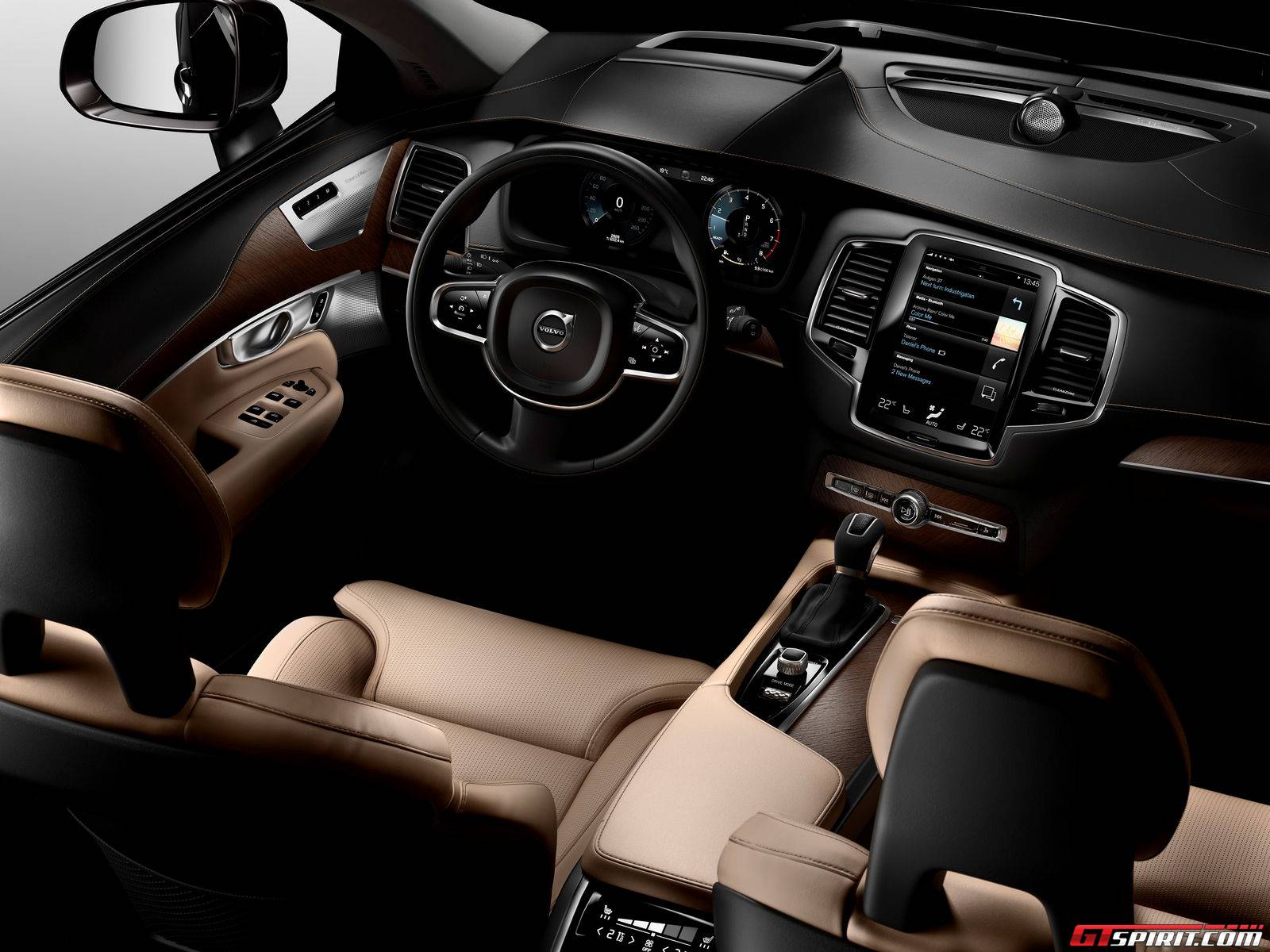
The interior style is clean and minimalistic. The main
infotainment feature is the large touchscreen display in the centre
console. The menu structures are clear and everything works as straight
forward as an Ipad. However controlling everything with touch does
require some attention and while driving it is not always ideal. We
really missed a turning knob to zoom the navigation map in- and out and
buttons to raise / lower the temperature of the climate control per
example.
The XC90 comes with keyless entry and keyless go. In the centre
console you find a start knob, turn it right and the engine comes to
live. Don’t expect a major spectacle there, all XC90 engines are
four-cylinder engines.
Below the start know is another switch to control various drive
modes: Efficiency, Comfort, Off-road and Dynamic. This controls
everything from throttle responds and gear changes to the optional air
suspension.

The steering wheel has buttons to control the adaptive cruise
control on the left side and the board computer and digital drivers
display on the right side. The drivers display allows the driver to
control key features and pop up a navigation map between the digital rev
counter and the speedometer, very similar to the Audi Virtual Cockpit.
The controls were a bit more confusing than the touchscreen in the
centre control but at least you don’t have to take your eyes of the
road. Overall the XC90 interior is a pleasant place to be but it doesn’t
feel quite as premium as a Q7, X5 or GLE. The infotainment features are
great and on par with the German rivals but not quite as easy to
control as Audi’s MMI or BMW’s iDrive.
Driving wise the 2016 Volvo XC90 D5 AWD Diesel has few surprises.
The four-cylinder wouldn’t be my engine of choice for a car that weighs
over 2,100 kg with 7-seats. With the air suspension it corners well
although the steering is less direct than that of the German rivals.
The new XC90 is packed with safety features and innovative
systems like adaptive cruise control, lane assist, park assist with 360
degree camera and city safety braking assist. Most of these systems we
are familiar with from other manufacturers. The adaptive cruise control
is activated with buttons on the steering wheel and is a highly
recommended feature for everybody that uses the XC90 as a daily driver.
The lane assist is not as advanced as that of its German rivals.
Instead of holding the position in the lane or even guiding the car
through corners, the Volvo lane assist only corrects with a steering
correction when you are leaving the lane. We also encountered the city
safety braking assist a couple of times; it braked once incorrectly for
an oncoming car in the opposite lane, once correctly but a bit early for
a car that stopped to turn right in my lane but mostly it didn’t brake.
In comparison to the Mercedes-Benz pre-sense brake system we tested
extensively the Volvo system feels more random in its acting. It is good
that it is available as standard on the XC90 but it is not as advanced
yet as Volvo wants us to believe.

To conclude the 2016 Volvo XC90 is a completely new car compared
to its predecessor. It has a spacious and simplistic interior and a
sleek exterior style. The new safety and infotainment systems take the
XC90 to new heights. However we find the European four-cylinder engines a
bit of misfit with the American-sized SUV. Also the lack of physical
buttons for the controls of some core features of the climate control
and infotainment are very inconvenient and take attention away from the
road. Compared to the key competitors like the BMW X5, Mercedes-Benz
GLE/GLS, Audi Q7 and Range Rover, the XC90 might win in design but falls
short in driving dynamics and luxury.